
guess the building where this space belongs series (number 4)
Architectural Research & Documentation


 Floor Plan and Longitudinal Section (partial, continues on next drawing).
Planta y sección longitudinal (parcial; continúa en el próximo dibujo).
 Longitudinal Section (continuation), Axonometric of principal spatial configuration.
Sección longitudinal (continuación); axonométrico de los principales espacios.
 Perspective of the Chapel.
Perspectiva de la capilla.

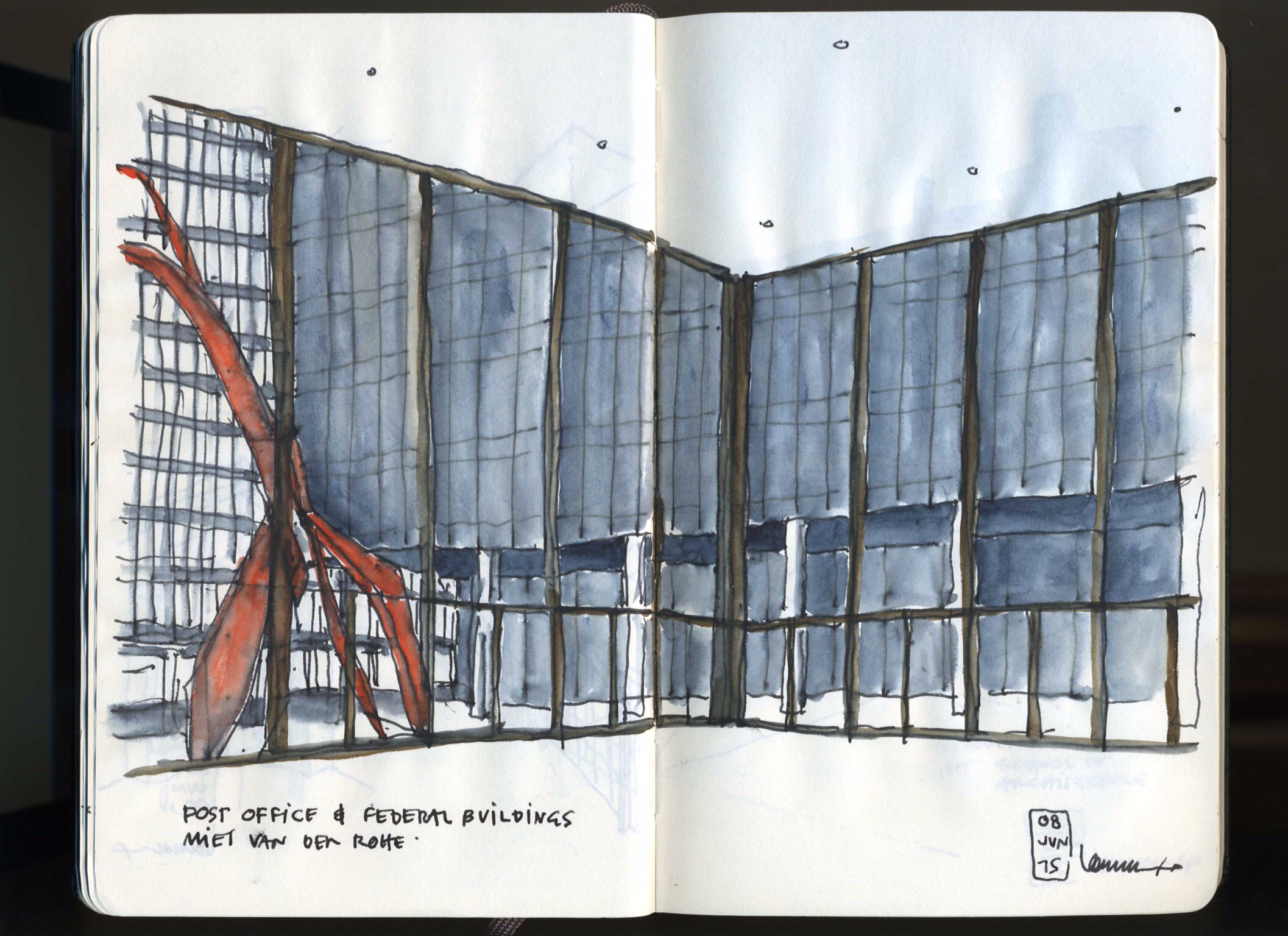
Until fairly recent I wasn’t a big fan of Frank Lloyd Wright. For some reason since my days at school of architecture I’ve always rooted against the great masters in favor of secondary-role (thus lesser known) architects. Even if I still root for the underdogs, nowadays — forced in great part by the impartiality required to teach objectively a course on History of Modern Architecture — I’ve come to really appreciate and understand the works of architects such as Wright.
During my trip to Chicago, where avoiding Wright’s work was simply not possible, I visited several of his buildings including his Home and Studio in Oak Park. At first I felt like it was going to be business as usual but there were so many instances in this place to ascertain Wright’s greatness as an architect (even if personally I still believe he was a huge S.O.B.) that if I had just visited this one place I would have felt the same way about his work. The structural achievements, material selections, attention to details and quality and greatness of its interior spaces all attest to his place in history as one of the most influential architects of the century.
Here are a few sketches I made during my visit.
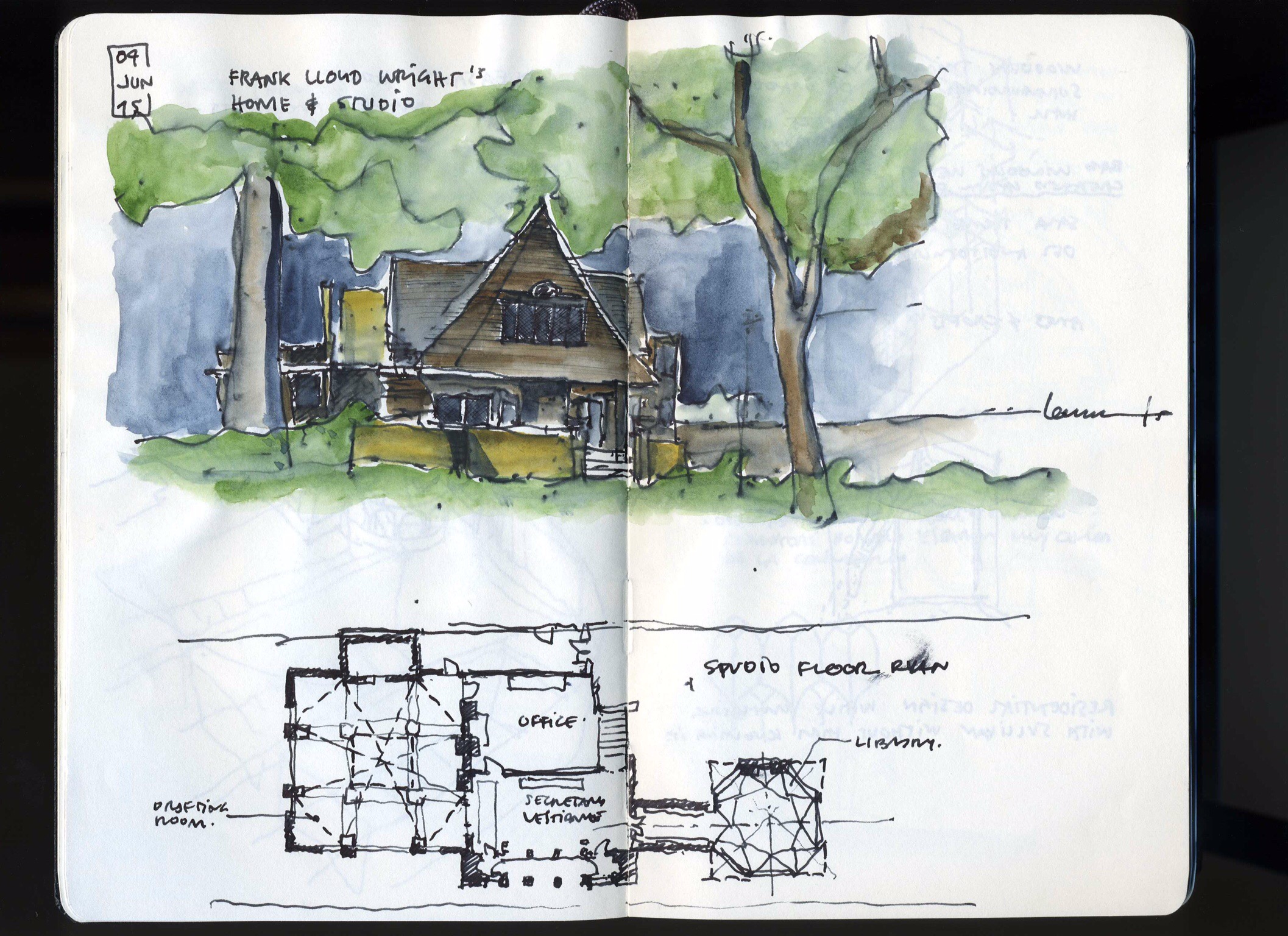 House main elevation and studio floor plan
 Notes and drawings of the hallway connecting the house and studio and an axon of the dining room, as well as, a detail of the dining room’s glass windows floral motif.
 Axon of the studio.
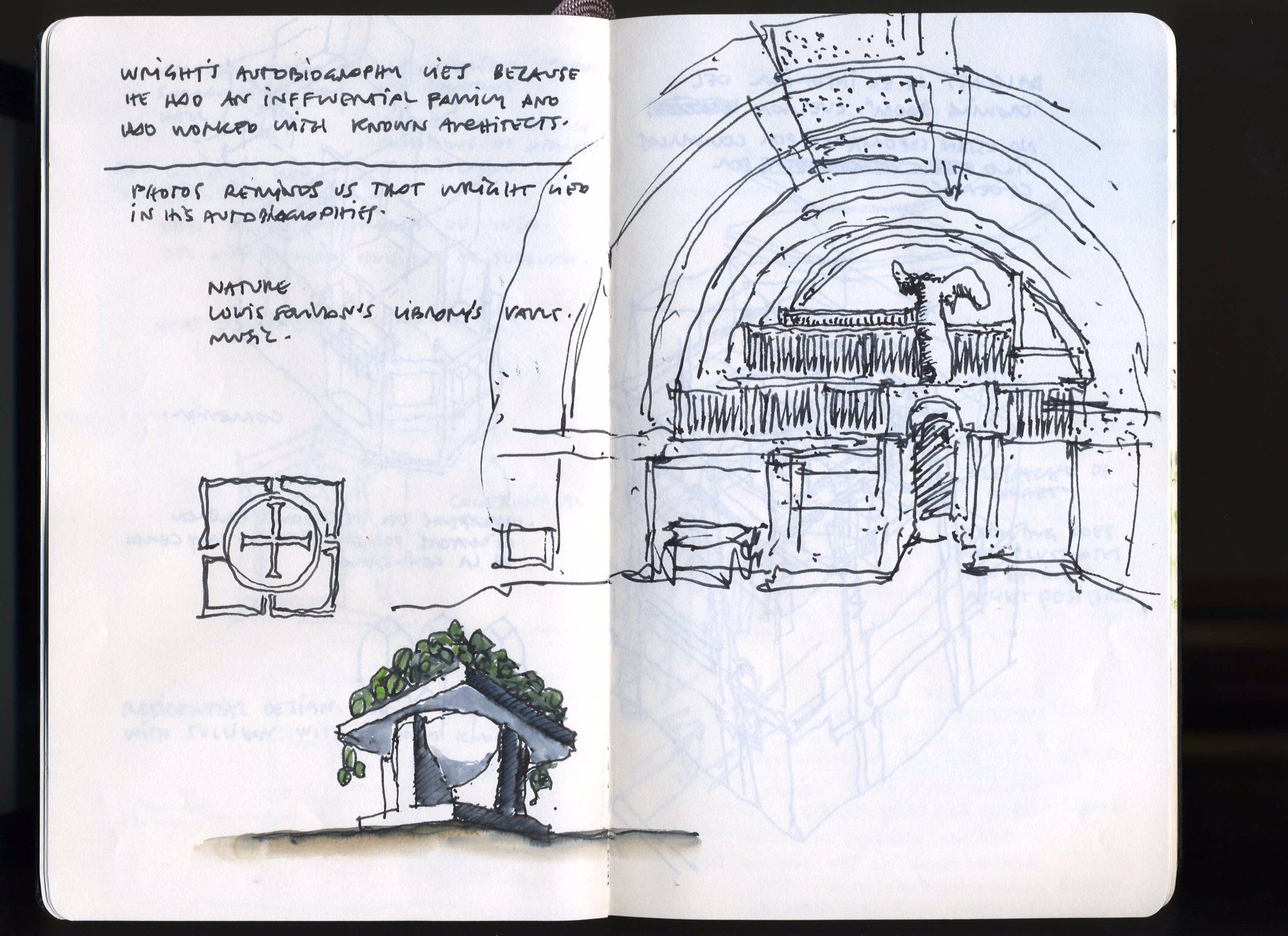 Un-rendered and rendered perspective (below) of the playroom.

The National Trust for Historic Preservation is considering relocating Mies van der Rohe’s Farnsworth House out of the Fox River floodplain. The idea is to move the structure from its original location parallel to the waterway to a nearby site, still along the river, but on a higher elevation. Throughout the years the house has been affected significantly by floodwaters at least three times. The last major damage occur in 1996 and the restoration costs elevated to almost half a million dollars. At that time, the flood broke windows, damaged the travertine marble floors and ruined the teak cabinetry.
The solution of moving the house is not the only one the Trust has juggled in order to protect the house from further damages. Two additional solutions not requiring to relocate the house have been contemplated so far. One — less viable, although favored by Dirk Lohan, a Chicago based architect and Mies’ grandson — requires the installation of hydraulic jacks underneath the foundations to lift the house during floods. A second one, provides to permanently raise the house on top of a 9-foot mound.

Each one of the alternatives entail major impact on the National Historic Landmark and needless to say, has raised many eyebrows not only on preservationists, but also throughout the architectural community. One of the leading voices is Mr. Lohan who was in charge of the 1996 restoration. He argues that moving the structure “…is not in keeping with the design concept of the house, which was a house in a flood plain, close to the river…The river was part of its immediate environment. To move it to higher ground where it never floods would be ridiculous. You would ask: ‘Why is it on stilts?’ It makes no sense to me.”

Having visited the house for the first time last month I really don’t see the problem with moving it. Arguably, given the nature of the house, an elevated object that relates to the river just by being in proximity to it and not much else, I see no problem in relocating it to a higher site to relieve the enormous preservation pressure and most importantly avoiding escalating restoration costs.

One knows that the success of the strategy depends on the execution and the careful conditioning of the new site to retain the overall experience. Nevertheless, I strongly believe that regardless of its location the house will continue to inspire future generations if the right action is pursuit, sooner rather than later, in order to move it out of harm’s way.
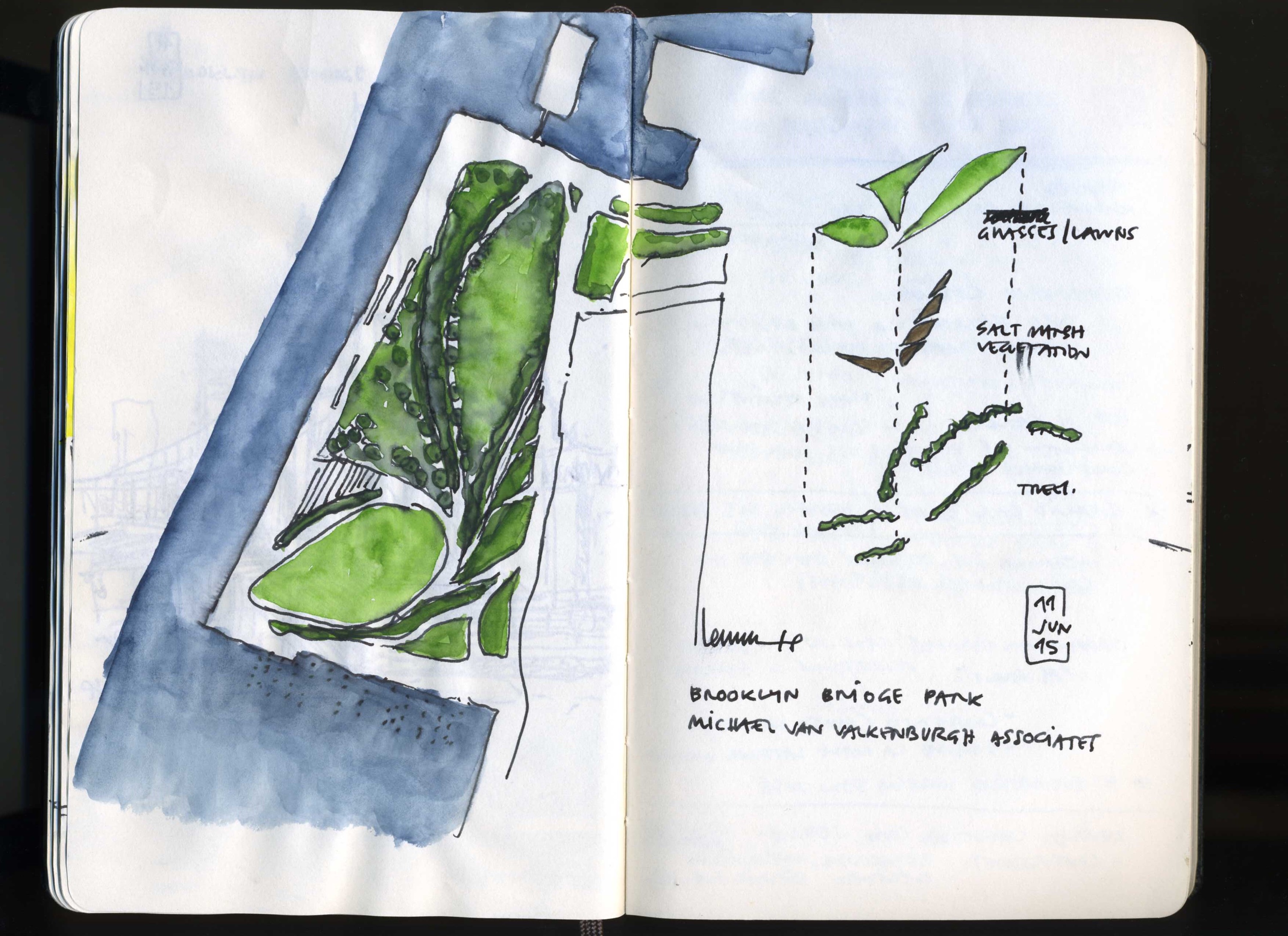 Brooklyn Bridge Park by Michael Van Valkenburgh and Associates.
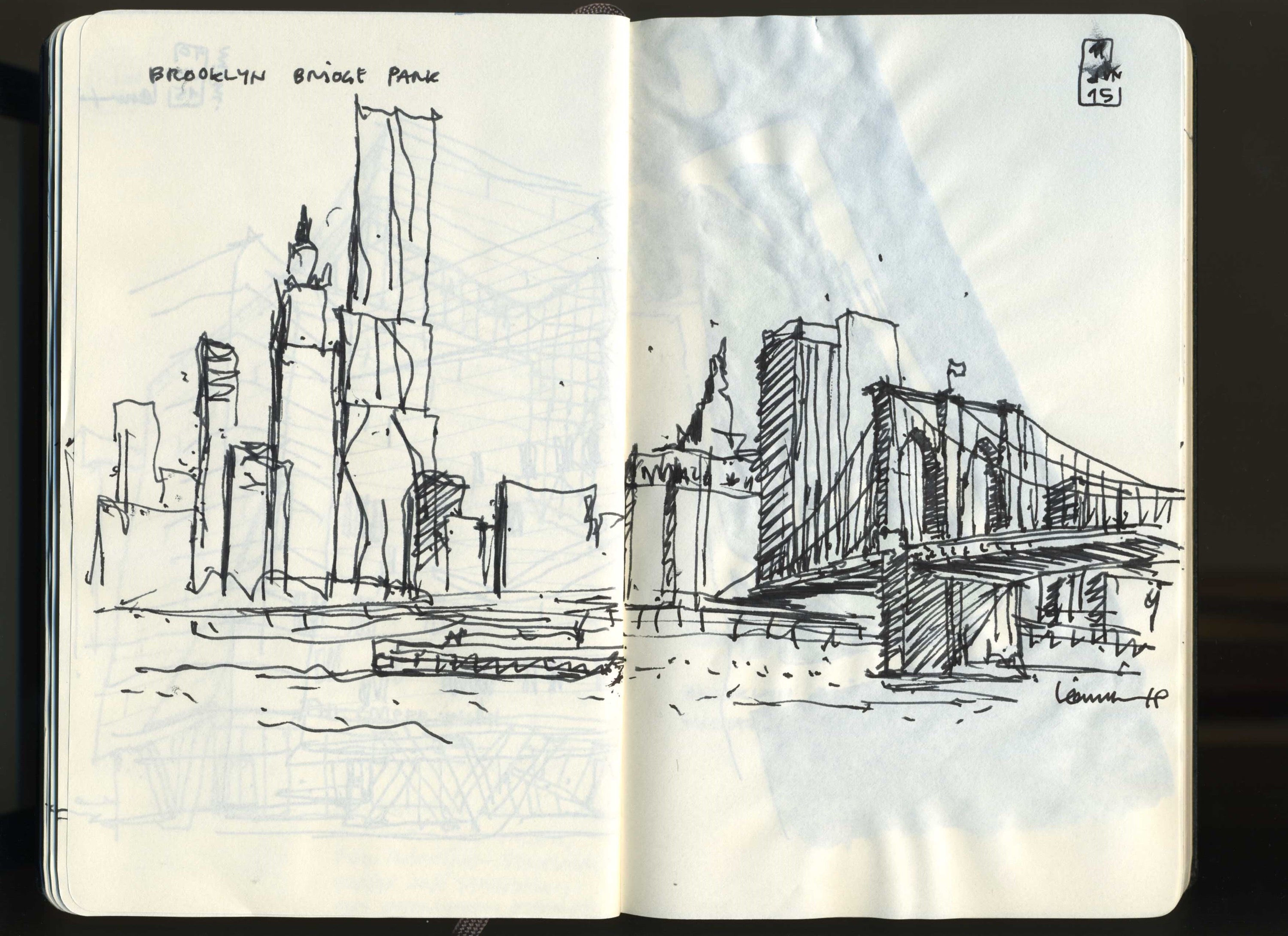 View towards Manhattan from the northwest corner of MVVA’s park.
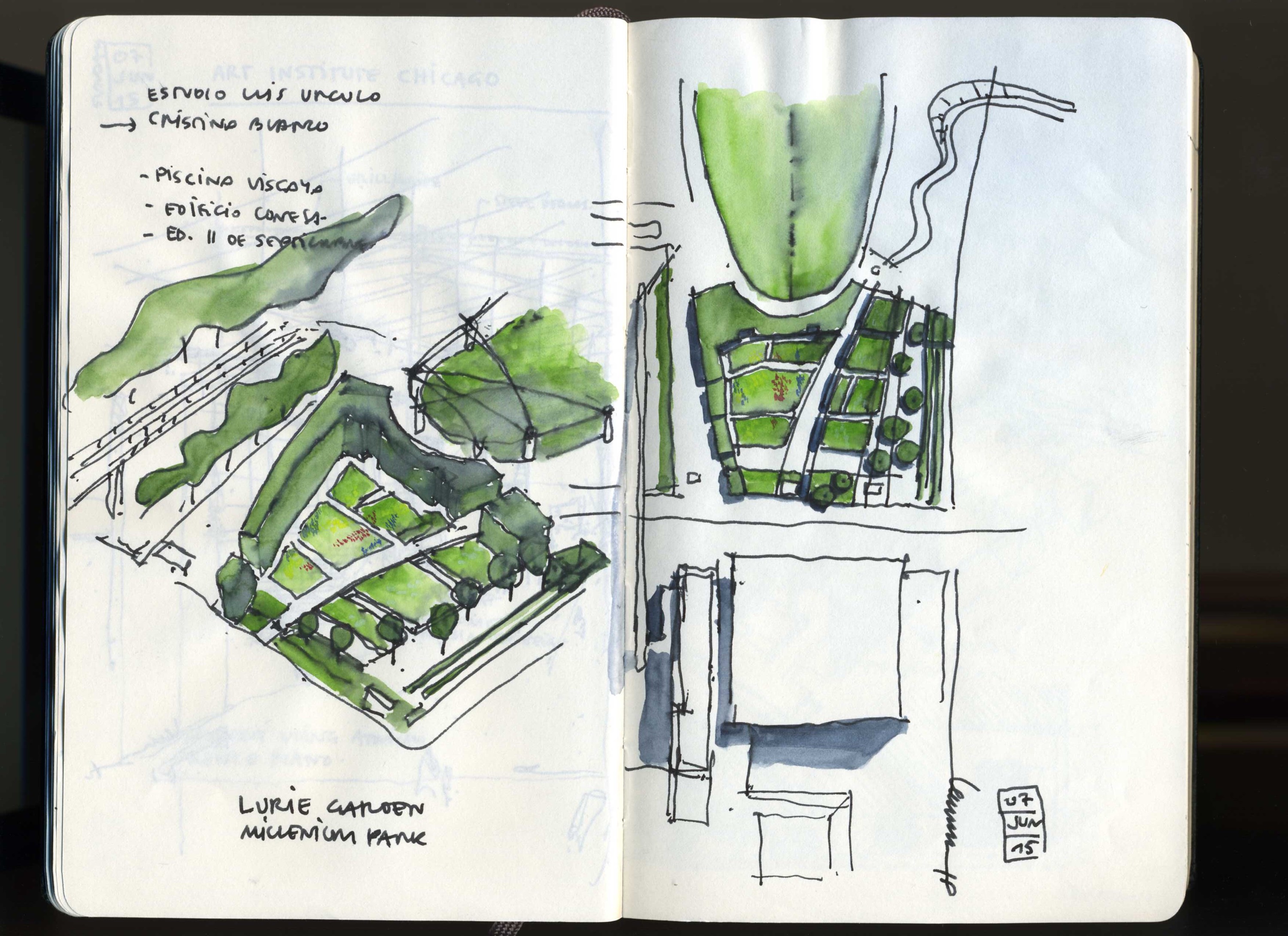 Lurie Garden designed by GGN; Kathryn Gustafson, Jennifer Guthrie & Shannon Nichol at Chicago’s Millenium Park
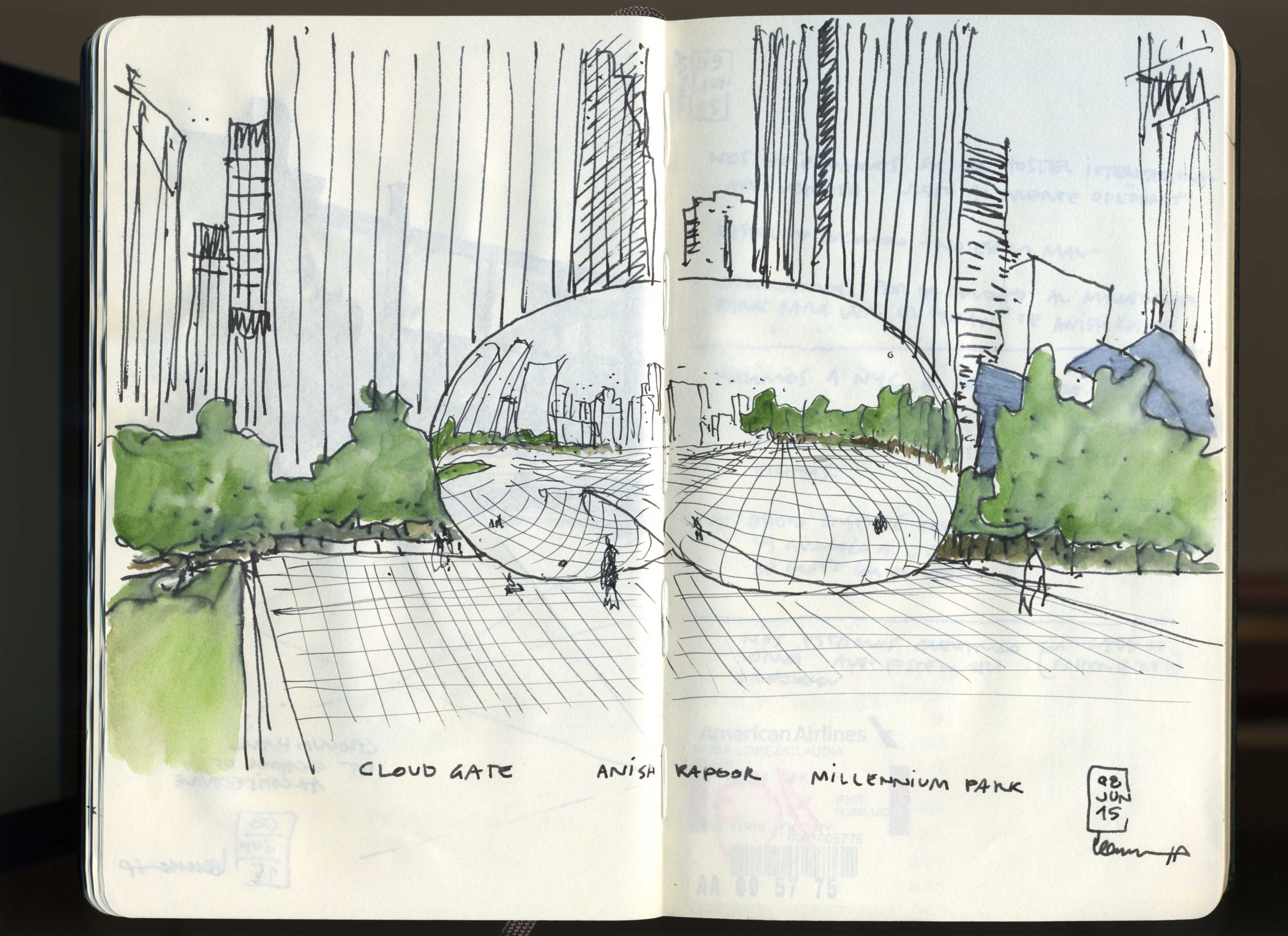 Cloud Gate by Anish Kapoor; Millenium Park, where Chicago’s skyline is reflected and interestingly distorted as if captured by a wide-angle lens.
Designed by the Swiss duo Jacques Herzog and Pierre de Meuron CaixaForum Madrid is a contemporary art museum and cultural center near Paseo del Prado.

The architects manage to make an existing brick structure defy gravity in order to provide an open ground floor, a strategy already tested – albeit timidly – at the Tate Modern in London. However, the feat is more interesting for its structural audacity than for the space gained. The free plan allows the building to hover while a stainless steel staircase invite visitors to enter. Nevertheless, due to the sloping terrain the noble intention of providing access from every street is not possible. Thus, the southwest area and the entire west façade are inaccessible since they remain sunken in relation to the sidewalks. One third of the square lies underutilized most of the time despite attempts by the designers to program it with benches and a leaking fountain.
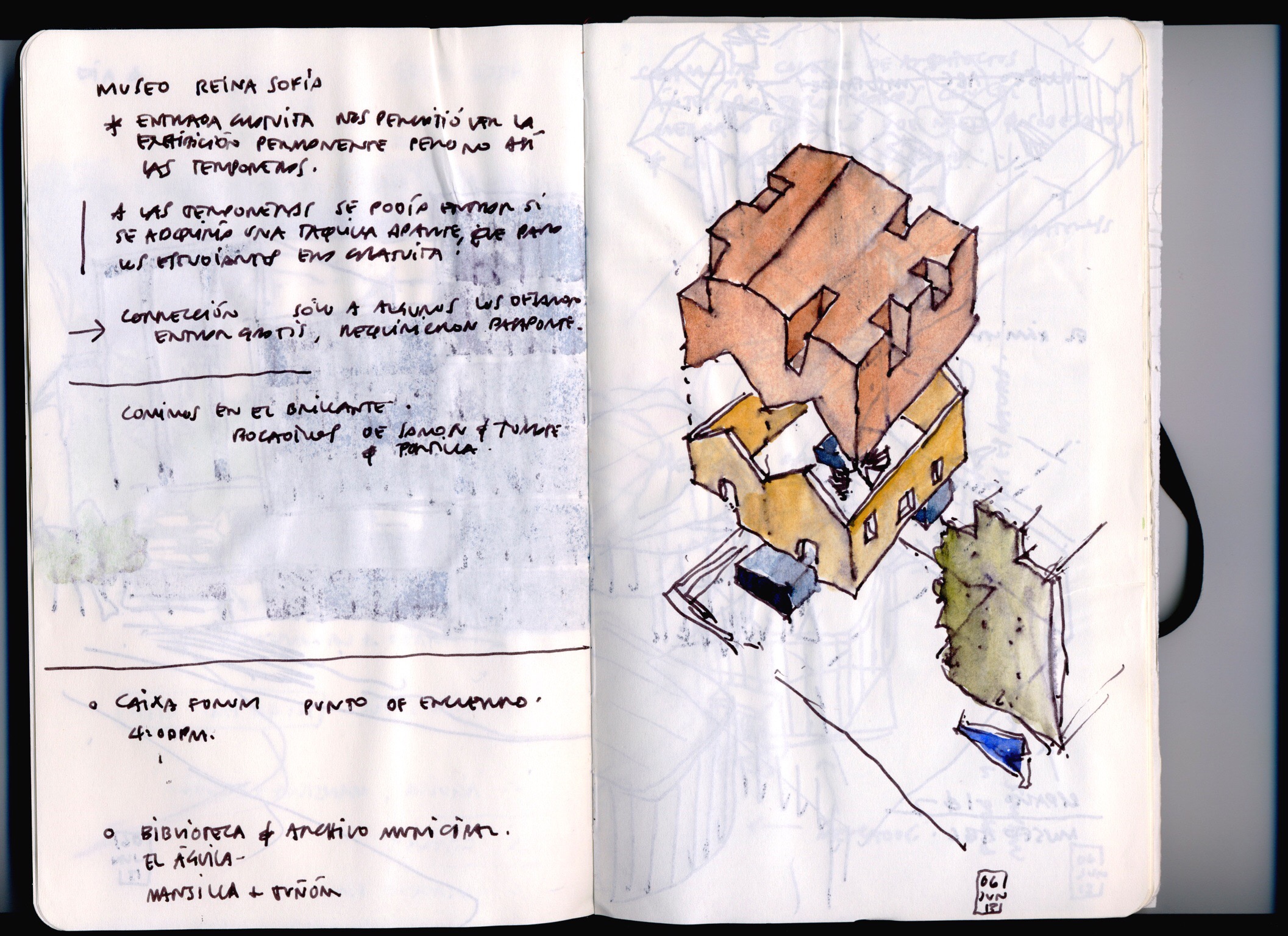
The opening at the corner of Almadén Street allowed the museum to become visible from Paseo del Prado. The square is complemented by a vertical garden conceived by the French botanist Patrick Blanc.

The main staircase, along with the entrance stair and the auditorium, is one of the hierarchical spaces of the Caixa Forum. Built in reinforced concrete, the staircase (illustrated above) literally pierce and spatially connects all museum levels. But, at each level the sculpted space is funneled rather awkwardly at the entrances of exhibition space.
 anonymous_architecture