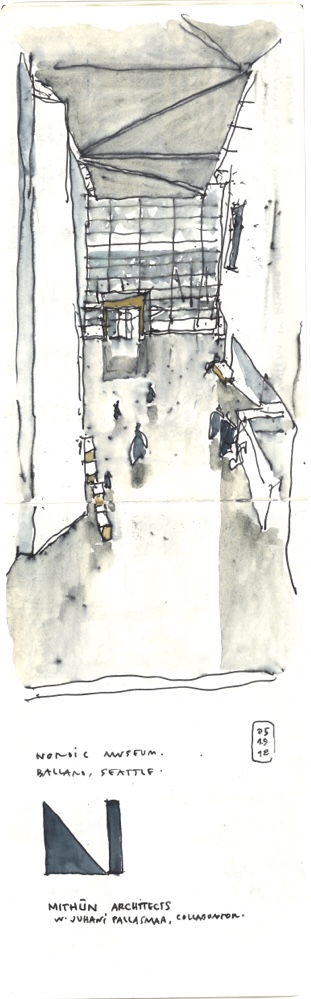
Two Atriums: The Nordic Museum and the Kiasma

The Nordic Museum in Ballard is a welcome addition to Seattle.* Designed by MITHŪN Architects in collaboration with Finnish architect and historian Juhani Pallasmaa, the institution exhibits Nordic art and cultural traditions.

At first glance, it is difficult not to point out the building’s resemblance to Steven Holl’s Kiasma Museum of Contemporary Art in Helsinki, Finland. Juhani Pallasmaa, who collaborated on both designs, could account for these similarities. Both museums share a spatial organization in which two longitudinal volumes flank a multistory atrium of comparable geometry and proportions.** Yet the apparent formal kinship conceals two fundamentally different attitudes toward the atrium—not as image, but as spatial organizer. Despite its smaller scale and more modest budget, the Nordic Museum’s atrium succeeds precisely where the Kiasma’s falls short: in serving as a functional organizing element rather than merely a monumental gesture.
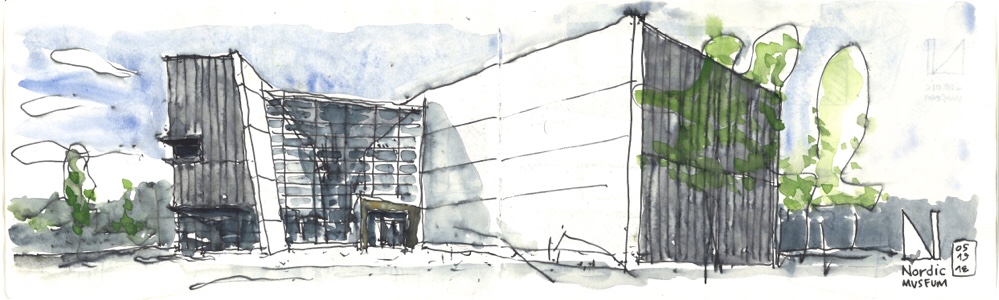
Despite their initial similarities, differences abound. Upon close inspection, at the Nordic—probably due to its reduced scale—MITHŪN managed to activate the atrium space much more gracefully than at the Kiasma.

While both museums offer similar programmatic experiences at ground level—where the cafe, reception desk, and museum store animate and promote social interaction upon entry—at the Nordic, these activities appear more seamlessly integrated with the main space simply because they remain visually and spatially open to the atrium.

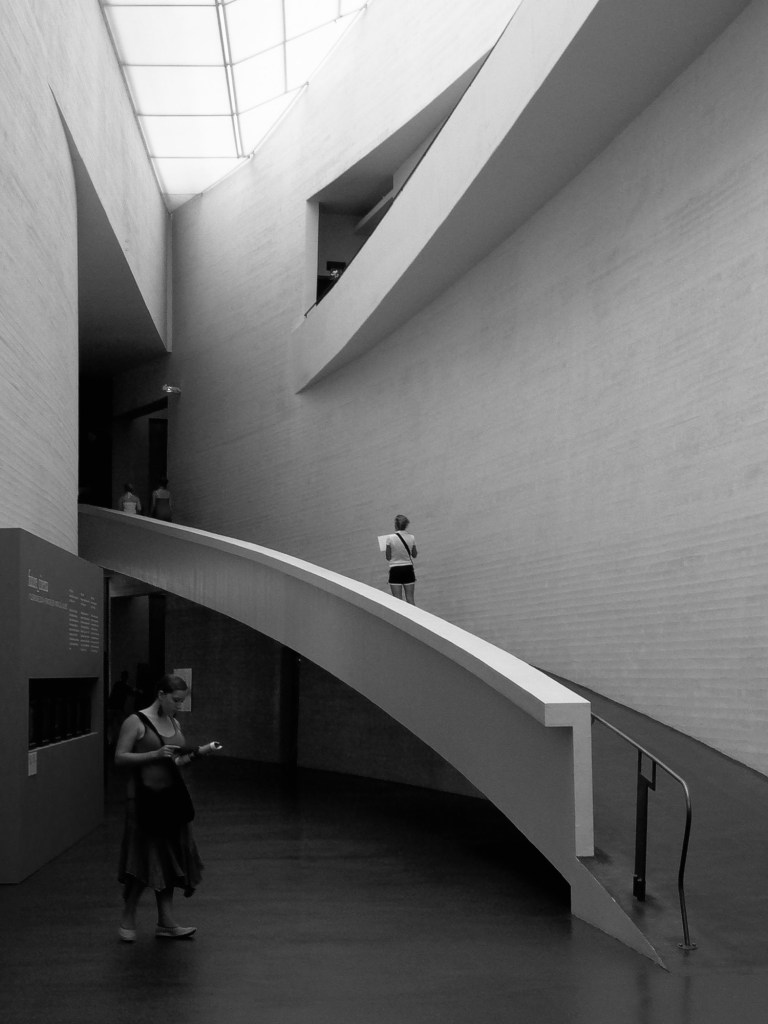
At Helsinki, by contrast, the atrium—in great part due to its size (50ft tall by about 200ft long)—remains somewhat segregated from the ancillary programs, even if directly adjacent to them. Beyond its scale, the separation is emphasized by the atrium being enclosed by tall, exposed-concrete walls with minimal openings in relation to their height.

More critically, the atrium at the Kiasma serves primarily as a monumental vestibule, while at the Nordic, the atrium doubles as the spine that organizes the museum.*** The multi-story hall is crucial as it helps visitors understand the museum’s layout without revealing inside exhibits. Additionally, a centrally located fireplace offers Seattleites a sense of place without an admission fee.
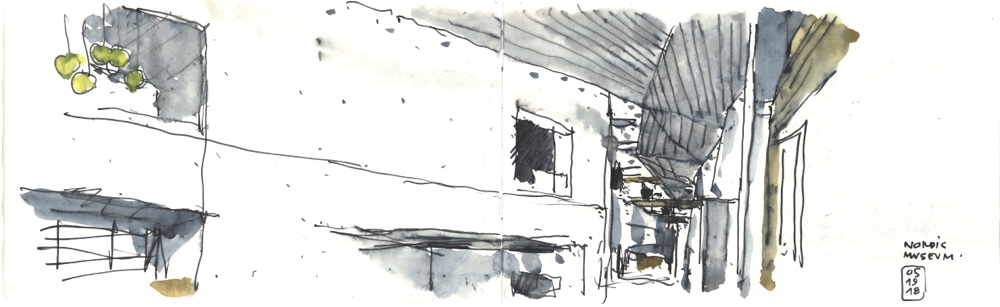
Mithūn based their design for the atrium on the geological formations known as fjords. These remarkable canyon-like landforms visually separate landscapes that nevertheless constitute a unified ecosystem throughout the Nordic Regions (including the Pacific Northwest)—were created millions of years ago by the movement of glaciers. The metaphor seems appropriate since the atrium becomes the spine that organizes the museum not symbolically, but operationally.

Such is not the case with its European sibling, where its atrium contorts—somewhat like a funnel—and the monumental scale consequently offers few cues on how to progress. An overhanging concrete ramp presents itself—almost as the visitor’s only viable option—to initiate our tour; however, one must find the ticketing booth first to gain access. That said—once started—the spatial sequence at Kiasma is well-executed. As is customary in great museums, it allows the visitors to traverse through without retracing their steps.
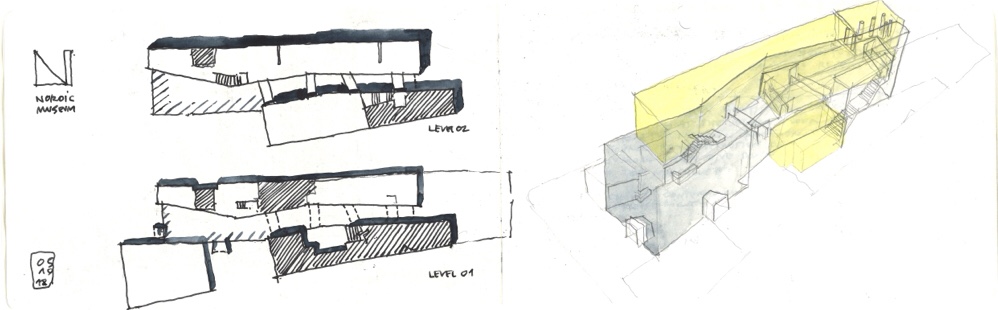
A more straightforward—yet successful—spatial sequence is experienced at the Nordic, not without some minor inconveniences. As illustrated above, the longitudinal atrium suggests the spatial arrangement. A series of bridges connecting the upper galleries, weaving across the atrium, are visible. Mid-way through the Fjord, a gallery opens up, and a monumental stair invites you to ascend.

Once on the second level, the sequence is free, and the bridges assist the visitor to zig-zag from one side to the next without having to go back on the already traveled path. One of the “parallel” bars extends beyond the other. The longest one houses a small library space and administrative offices. But before reaching the library, a flight of stairs invites us to descend, culminating the spatial sequence right behind the reception desk where the tour started, but conveniently inside the museum store.

Yet this otherwise legible spatial sequence has one notable exception: the East Garden. Unlike the carefully choreographed interior route, the garden functions as a spatial cul-de-sac. Visitors who bypass the second level and head toward the garden find the museum’s organizing logic abruptly dissolving—no onward path, no alternative route, only the need to retrace their steps. This seems less an intentional pause than a residual space shaped by operational or administrative constraints, momentarily undermining the atrium’s otherwise successful role as the museum’s spine.

Ultimately, the Nordic Museum demonstrates that architectural success isn’t simply a matter of budget or prestige. Despite its more modest scale and less refined material palette, Mithūn’s design achieves something Holl’s larger, more expensive Kiasma struggles with: an atrium that genuinely organizes and activates the museum experience. The fjord metaphor works precisely because it’s functional, not merely conceptual. Yet one can’t help but wonder what the Nordic might have been with Helsinki’s construction budget—or conversely, whether the Kiasma’s monumental ambitions might have benefited from Seattle’s more pragmatic, integrated approach to the central space. The comparison reveals that in museum design, spatial clarity and programmatic integration often matter more than material luxury.
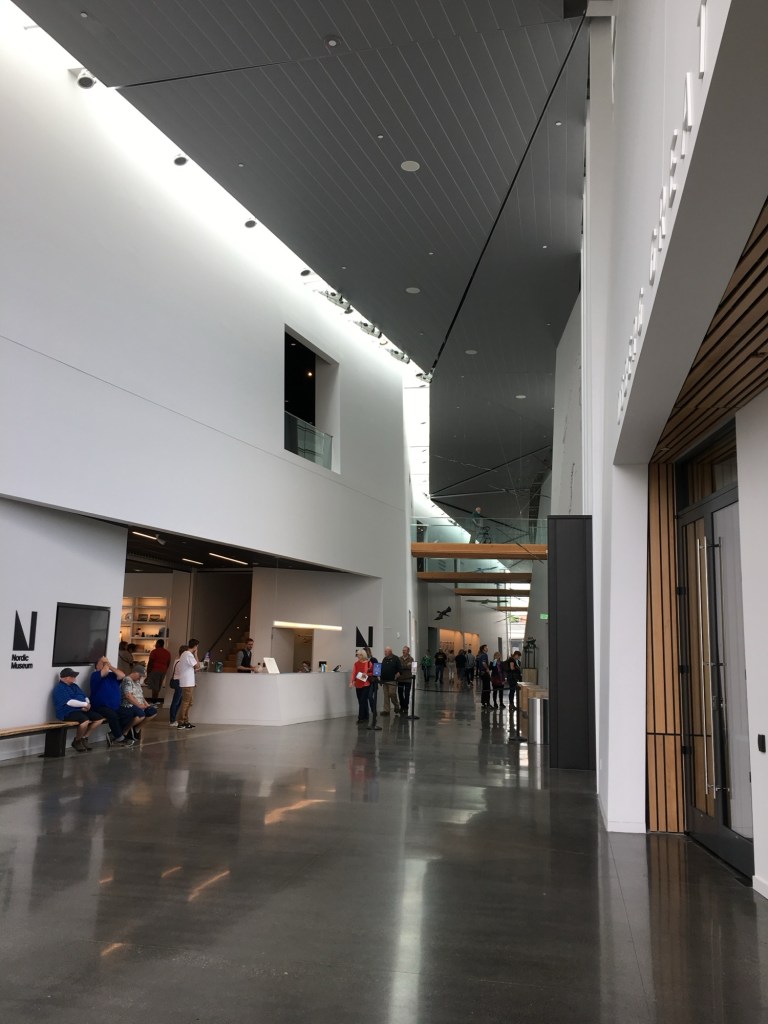
Fjord atrium at the Nordic Museum (Photo by author)
Entry atrium at Kiasma Museum (Photo by author)

ENDNOTES:

*After living in Seattle for over eight years, one could argue that besides OMA’s Public Library Downtown or Steven Holl’s jewel box Chapel of Saint Ignatius in First Hill, there are few noteworthy contemporary cultural buildings. The dominance of design-build delivery methods and commercial construction pressures seem to constrain the kind of ambitious institutional architecture seen in other cities or federal projects—limiting the refinement of interior spatial sequences and material detailing that distinguish truly exceptional cultural buildings.

Don’t get me wrong; there are numerous notable additions and interventions to institutional buildings throughout the city. For example, the Space Needle renovation by Olson Kundig, or even LMN’s restoration and expansion to the SAM Asian Art Museum, are among the best.

There are also great contemporary public spaces, like the recent James Corner Field Operations’ Waterfront Park transformation—reconnecting the city to Elliott Bay—or the earlier Weiss/Manfredi Olympic Sculpture Park and Berger Partnership’s Magnuson Park.

**After careful examination of both projects, it becomes evident that the scale of both museums varies considerably, as do their construction finishes. Their formal complexities also differ considerably. At the Kiasma, the signature of its lead designer Steven Holl creates an unparalleled display of double qheight spaces, spiraling stairs, sculptural ramps, and beautifully crafted rooms, all bathed by sunlight piercing through skylights and full-sized glass walls and ceilings of different types.

For information on the Kiasma visit: https://www.archdaily.com/784993/ad-classics-kiasma-museum-of-contemporary-art-steven-holl-architects

***Since my last visit to Helsinki in 2003, the Kiasma Museum has undergone a series of renovations. Most notably in 2016 the museum completed an interior refurbishment of the entrance level, including the lobby and museum shop, aimed at improving functional clarity and creating a more welcoming, lounge-like atmosphere. These interventions focused primarily on operational clarity rather than on rethinking the atrium’s spatial agency or its capacity to guide visitors intuitively.

Subsequent renovations between 2020 and 2022 addressed significant envelope and roof performance issues and upgraded building systems, but did not substantially modify the atrium’s role as a monumental vestibule. As such, the observations presented here regarding the atrium’s spatial behavior and its relationship to visitor movement remain largely applicable.

SITE

Understanding the Nordic Museum’s site helps explain why the atrium functions so effectively as an organizing spine. The Museum sits on a two-acre lot along NW Market Street, a short distance from the shoreline of Salmon Bay and a few feet away from the Hiram Chittenden Locks, better known as Ballard Locks. The site is longitudinal (slightly trapezoidal), and it is about the same area as a typical residential block in the neighborhood. This narrow, elongated site naturally suggested the two parallel bars flanking a central atrium—the very configuration that MITHŪN exploited to create a legible circulation sequence.

Along Market Street, the building adheres to the street frontage, receding at the corner of 28th Avenue, where a small plaza signals the entrance. Three additional entries give access to the building; two secondary entries along Market Street (through the museum store and cafe) and another on the south side of the building, allowing access to visitors from the parking lot. The multiple entry points reinforce the atrium’s role as the central reference point from which all circulation is organized.

However, the average visitor coming from downtown Seattle traverses the entire length (400 feet) of the museum along Market Street. Many regard this approach as an unfortunate urban response since the main façade, along Market Street is for the most part, impenetrable. For others, the blank façade, clad in metal panels, is reminiscent of the warehouses that occupied the site and others existing along the shore. This extended approach, however, heightens the drama of entering the atrium—the moment when the building’s organizational logic suddenly becomes clear.

ADDITIONAL COMPARISONS

Besides the similarities, there seems to be a chasm between the two structures. The construction materials employed at the Kiasma are of far superior quality and were assembled with the utmost attention to detail. At the Nordic, by contrast, soaring construction costs in Seattle appear to have taken a heavy toll on the selection of materials and finishes.

For example, the interior walls at the central atrium of the Kiasma are made of exposed white concrete. At the Nordic, gypsum board was used instead. Also, the exterior cladding at the Nordic is made of pre-finished standing-seam and fiber cement board. At the Kiasma, by contrast, hand-sanded aluminum panels, ‘u-glass’ curtain walls, acid-reddened brass mullions, and zinc (with titanium and copper alloy to allow a patina with time) standing-seam panels with titanium and copper alloy finish were employed. These are just a few material comparisons, but many abound.

At first, the comparison seems unfair—surely the Kiasma, with its larger footprint of around 130,000 square feet compared to the Nordic’s 57,000 square feet, had a proportionally larger budget. However, a closer look at their construction budgets reveals a surprising reality that helps explain the material disparity.

The construction budget for the Kiasma Museum in 1998 was $38M (about $58.5M in 2017). By contrast, the Nordic’s budget was $47M. Despite having less money overall, the Kiasma’s cost per square foot was around $450 (in today’s money) while the Nordic’s was $850 per square foot. In other words, the Nordic Museum cost nearly twice as much per square foot to build, yet displays noticeably inferior materials. This paradox illustrates Seattle’s inflated construction costs: MITHŪN had to spend far more money to achieve far less material refinement.

Casa Klumb

Front view of Casa Klumb, with Henry Klumb standing in from of the reflecting pond (left) and his wife Else standing next to the entry stoop (center right).

La Casa Klumb

Casa Klumb was one of the highlight subjects while teaching a course on History of Modern Architecture during my academic tenure in Puerto Rico. Even as a student in Architecture School, the almost inaccessible house had an aura that fired-up the imagination of many of us.

Now, the fire that consumed the property provoked the publishing of these notes. Moreover, the aerial videos shared on social media platforms of the house engulfed in flames prompted me to think of the last act of Los soles truncos (a dramatic comedy in two acts) by René Marqués, where a house — the symbol of a prosperous life in previous times — was consumed by fire (along with the main characters) as an act of immolation.

This thought transformed the rage and sadness I felt by this terrible loss and offered a certain sense of relief while I accounted for the state of disrepair and neglect that Casa Klumb had been suffering for decades.

A brief history

The Henry Klumb House in Sabana Llana, Río Piedras, a neighborhood of San Juan, was initially known as the Cody Ranch. The house was a nineteenth-century casona, and it acquired architectural significance from the considerable alterations performed by the German-born architect Henry Klumb in 1949.*

Klumb and his wife Else bought the house in 1947 and lived in it, along with their two sons until 1984, when both parents died in a car accident. The property remained unoccupied since then and was acquired shortly after in 1986 by the University of Puerto Rico. Despite this, it was abandoned, bearing significant degrees of deterioration over the years.

In 1997, already in a grave state of disrepair — but still retaining much of its architectural integrity — it was included as a Regional Monument in the United States National Register of Historic Places. In 2012, it was elevated to the status of National Monument by the same entity.**

Large-format photograph of Casa Klumb
at MoMA’s exhibition Latin America
in Construction: Architecture 1955-1980.
Photograph of the exhibition by John Hill; https://www.flickr.com/photos/archidose/; accessed 05/10/2015.

In 2014 efforts were made to include the house within the World Monuments Watch’s List or endangered structures, and in March of that year, Comité Casa Klumb (a committee to oversee the restoration of the house) was created.

These efforts alongside the inclusion of Casa Klumb among the subjects at the exhibition Latin America in Construction: Architecture (from) 1955 (to) 1980 at the Museum of Modern Art in New York in the Spring of 2015 where all signs in the right direction pointing towards its preservation.

Despite raising monies and awareness for its restoration; multiple events difficulted taking the affirmative actions required to avoid its destruction and loss.***

Klumb’s intervention

The original house was a typical Caribbean casona with a pitched roof, and wood floorboards raised from the ground to allow for cross ventilation to keep the humidity of the ground away from its interiors; an open veranda or balcony wrapped the house almost entirely. Klumb’s intervention resulted in the subtraction of elements rather than adding to the existing structure. In a series of strategies that appeared to adhered more with Le Corbusier’s Open Plan approach, Klumb eliminated — almost in their entirety — the enclosing walls of the house to allow continuity between the public spaces and the veranda.

Casa Klumb, Main Floor Plan, 1949
Henry Klumb, FAIA

Thus, the living room (in the front) and the dinning room (at the back) — maintaining the original turn-of-the-nineteenth-century layout — were left completely open, exposed to the natural breeze and exterior conditions; only the roof (and the fact that it was raised from the ground) provided shelter from the natural elements. The surrounding vegetation, a unique feature of the house’s siting as illustrated in the original photographs (and sketches) below, allowed an additional layer of protection.

Main living room with original furniture designed by Henry Klumb and Stephen Arneson; ARKLU (Photograph from the professional archive of Henry Klumb at AACUPR)

The bedrooms remained partially enclosed. However, large operable windows and pivoting doors (with louvers) allowed for privacy while allowing cross ventilation. When opened, the doorways provided visual and physical connection with the balcony and public areas of the house. A few additional walls throughout the house, were lifted a few inches from the floor and did not touch the ceilings, to allow for the uninterrupted flow of air. The exterior wall of the main bedroom was articulated in plan to be ”floating” (detached from the rest of the encircling walls) and thorough slim swing doors, provided direct passage to the veranda and an additional form of air circulculation.

Henry Klumb reading. The exuberant palm trees provided privacy from onlookers. The tensile structural elements along the veranda guardrails, added by Klumb, were required once the removal of perimeter walls, to help withstand the pull forces exerted on the roof by strong storm winds.
View from the veranda of the reflecting pool in the front yard. Loose gravel pavement was used throughout the periphery of the house because the crunching sound of steps notified them (and their dogs) of trespassers and visitors.
IMG_1791.JPG
View of the main living room, the low wall divided the study or home office.
IMG_1792.JPG
View of the veranda and dining room table.
IMG_1790.JPG
Details of the dining table structure and rotating mechanism.
IMG_1789.JPG
Floor plan and axonometric view.
Sketched floor plan (probably by Klumb) illustrating the spatial relationship and location of mobile and built-in furniture throughout the house. (Image from https://www.facebook.com/AACUPR/photos/a.147654355334879/422045364562442/)

Additional notes on the history of the house

The original casona belonged to José Ramón Latimer and his wife Esther C. Cody, who rented out rooms for people visiting from the mainland. Before Klumb purchased the property for himself, and for a brief period of time between 1944 and 1945, the Cody Ranch served as the residence for Richard Neutra and his wife Dione Niedermann.

Both Klumb and Neutra served as design consultants under the government of Rexford Tugwell. However, the collaboration between them was far less cordial as imagined. Family letters written by Dion Neutra, while their sojourn in the Island, portrayed the competitive relationship of her husband and Klumb, almost as nemesis.

She explains how they managed to rent an available room at Cody Ranch and what it was like to live in Puerto Rico. In the end, the Neutra’s left to pursue his career elsewhere after not being able to secure additional work in Puerto Rico. Klumb, on the other hand, remained on the island and made prosperous professional life for himself.

Notes:

*Henry Klumb, was born in Cologne, Germany in 1905. He emigrated in 1927 to the United States to become an apprentice at Frank Lloyd Wright’s Taliesin North in Wisconsin. He left Wright’s apprenticeship after five years, and worked briefly with Louis I. Kahn and Louis Metzinger, forming the Cooperative Planners firm in Philadelphia during the Great Depression.

In 1944, Klumb was invited by Rexford Tugwell (Governor of Puerto Rico at the time) to work as a design consultant at the Public Works Design Committee. A few years later, he established the Office of Henry Klumb in San Juan from where he designed all types of private and public projects all over the Island.

** For a copy of the registration form visit: https://npgallery.nps.gov/GetAsset/4183ae4d-6f2d-4918-82b0-682a3b7ed16c (Accessed 11/12/20)

For National Register list of properties in Puerto Rico, including Casa Klumb refer to: https://www.nps.gov/state/pr/list.htm?program=all (Accessed 11/12/20

For World Monuments Watch refer to: https://www.wmf.org/project/henry-klumb-house (Accessed 11/12/20)

*** The exhibition celebrated the 60th anniversary of the show MoMA organized in 1955 about Latin American architecture built by 1945. At that time, the architectural production of a decade was presented and in representation of modern architecture in Puerto Rico, two works were exhibited: the Caribe Hilton Hotel by Toro y Ferrer Arquitectos and the Sanctuary of San Martín de Porres by Henry Klumb.

For additional thoughts on the work of Henry Klumb and MoMA’s exhibition refer to: https://anonymousarchitecture.co/2019/01/10/henry-klumb-two-buildings-one-idea/

*** The house was owned by the University of Puerto Rico, a public entity enduring significant challenges due to the economic recession. Not to mention the impact of natural events like hurricane Irma and María in 2017 and the political turmoil that forced the exit of the sitting governor; all circumstances that somewhat justify the inaction to save the structure.

Acknowledgements

All photographs are from the professional archive of Henry Klumb at AACUPR, Archivo de Arquitectura y Construcción de la Universidad de Puerto Rico (University of Puerto Rico’s Architecture and Construction Archive) unless otherwise noted.

The author made all hand sketches during a guided tour organized by the restoration committee as part of a series of activities to raise awareness of the house condition and raise funds for its rehabilitation. High-quality print outs of these sketches were donated for auction, alongside other work by myriad artists, architects, and historians during a fundraising event.

Brise-soleils

The following text was originally published in Spanish on May 28, 2020 by the Fundación por la Arquitectura of the Architects and Landscape Architects Association of Puerto Rico (CAAPPR) as part of their campaign ”Arqui Desde Casa” during the lockdown period due to Covid-19. Scroll down for English translation.

La piel de la arquitectura de Henry Klumb

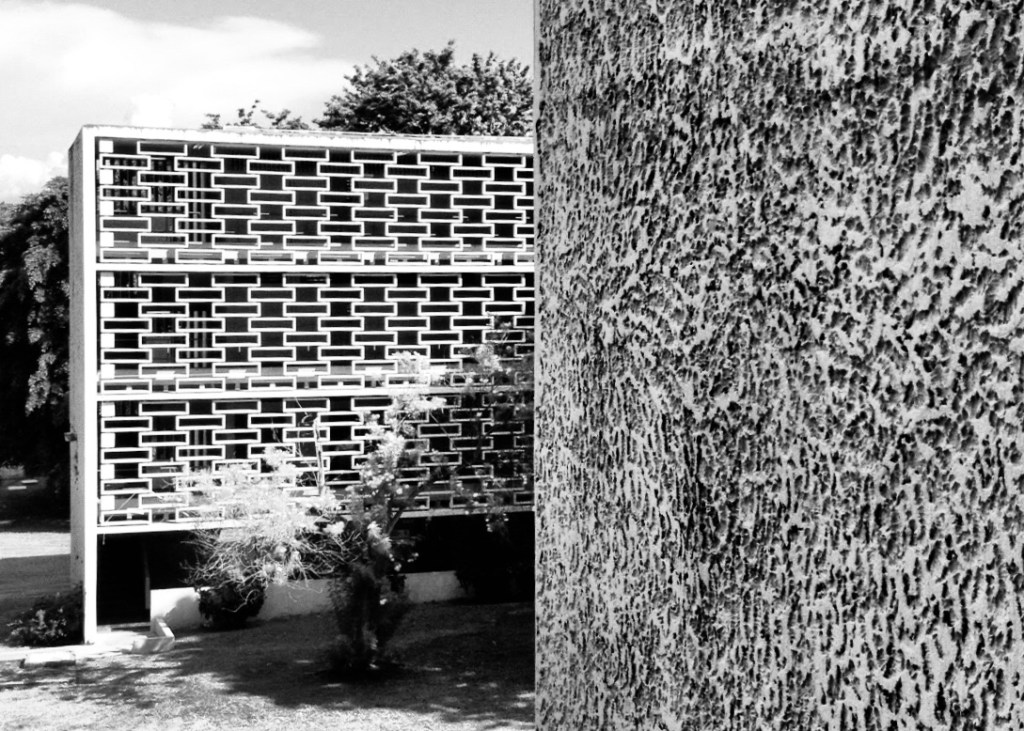
Las siguientes acuarelas se centran en la obra del arquitecto alemán radicado en Puerto Rico, Henry Klumb, especialmente en los quiebrasoles y mamparas que utilizó en la mayoría de sus obras institucionales.

Mucho se ha escrito sobre el trabajo de Klumb y su deseo — casi un predicamento — de producir una arquitectura adaptada al trópico, emplazada para beneficiarse de la ventilación cruzada, garantizando su habitabilidad sin exponerla al innecesario consumo energético.

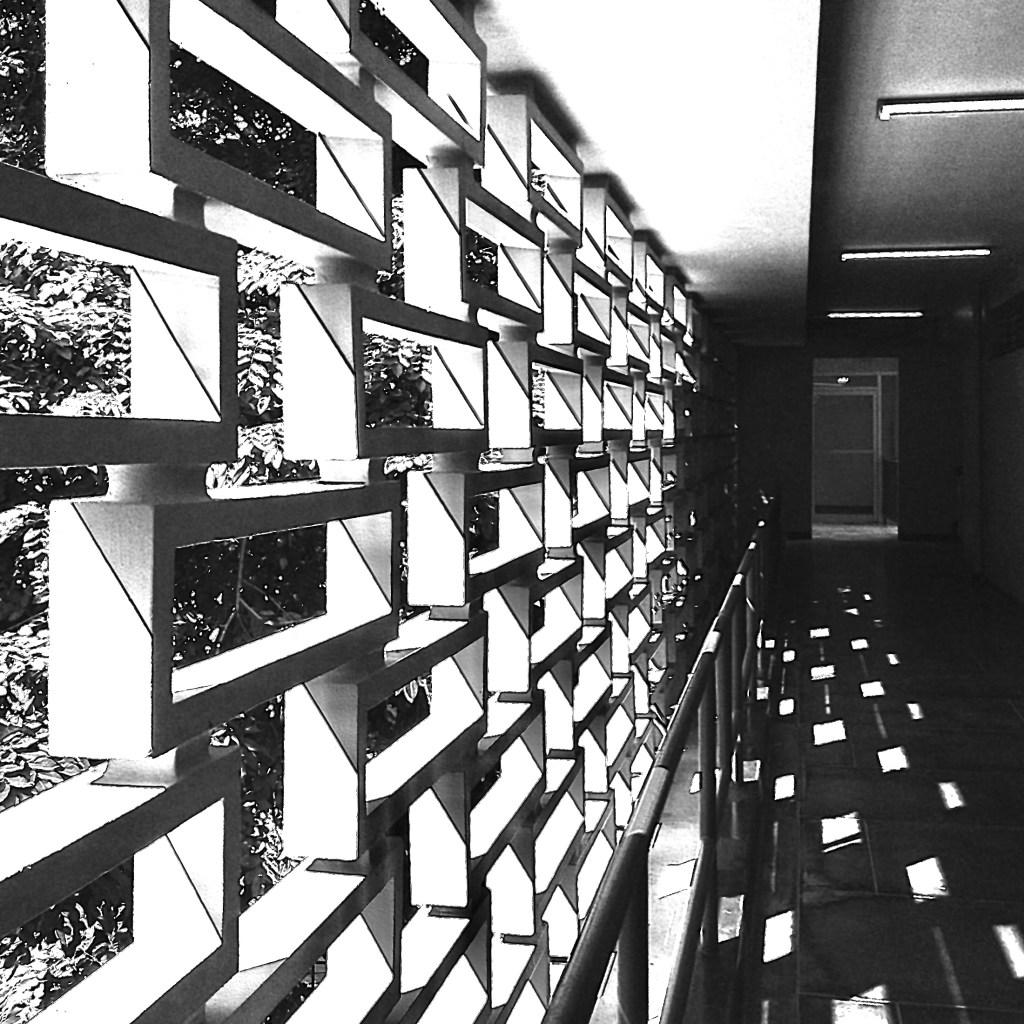
Aquellos que han experimentado su obra en persona reconocen el rol protagónico de los sistemas de quiebrasoles o brise-soleils en la experiencia de su arquitectura. En especial la forma en que estos matizan el impacto del sol, contribuyen a la privacidad (y, en muchos casos, seguridad) y la capacidad de relacionar la actividad del exterior con la de los espacios interiores.

Ahora bien, a quien haya mirado de cerca los edificios que incorporan estas pieles permeables, poca imaginación hace falta para reconocer que mucho del carácter de estas estructuras recae en estos elementos prefabricados.

Invito a idearnos estos edificios sin su piel, cuando entonces se revela una arquitectura de pocas complicaciones o pretensiones, con ventanas de celosías de madera, aluminio (tipo “Miami”) o de paños de cristal, junto a muros lisos de bloques de cemento empañetados, en fin, una arquitectura opuesta a lo que muchos esperan de obras institucionales.

Tal señalamiento no propone restarle mérito a la obra de Klumb, pues excepciones sobresalientes abundan en su arquitectura. Solo basta mencionar el patio de la Escuela de Derecho, el corte transversal de administración de empresas y la capilla del convento dominico, por mencionar solo unos cuantos.

Por el contrario, el argumento recae más que nada en los volúmenes que se visten de los quiebrasoles, donde se reconoce en el diseñador la habilidad de producir una arquitectura “corriente” o más bien “plain” y dotarla de aspiración estética mediante el sencillo acto de enriquecer sus fachadas, despejadas de elementos prescindibles a través de su piel.

Fachada (Oeste)
Edificios Osuna, O’Neill, Betances y Rivera de Alvarado
(Facultades de Administración de Empresas y Ciencias Sociales, Universidad de Puerto Rico, Recinto de Río Piedras)
Fachada principal (Este)
Edificio IBM
(Kings Court y Calle Loiza, San Juan)
Fachadas este y oeste
Escuela de Derecho
(Universidad de Puerto Rico, Recinto de Río Piedras)
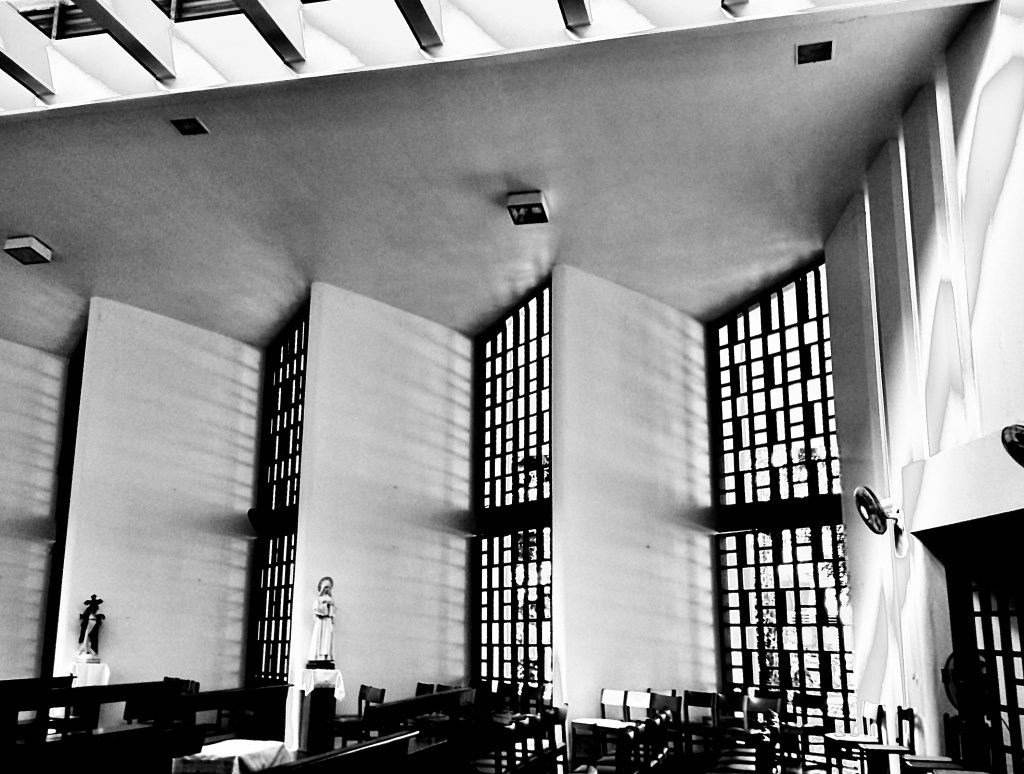
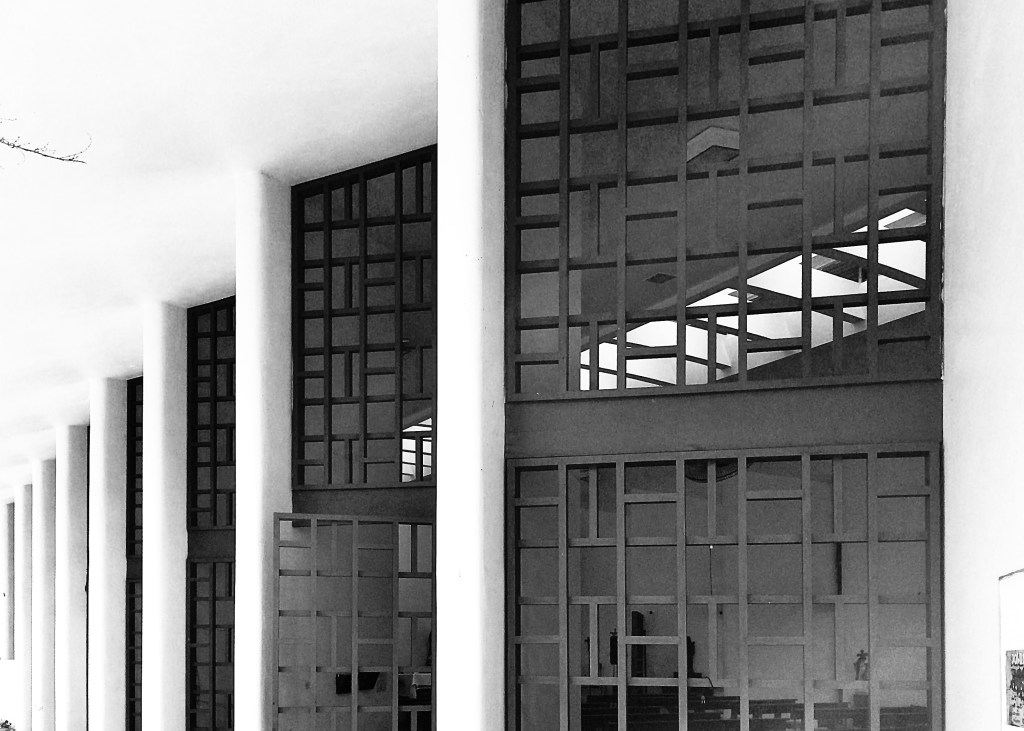
Mamparas de madera (auditorio/capilla)
Convento de los Frailes Dominicos
(Bayamón, Puerto Rico)
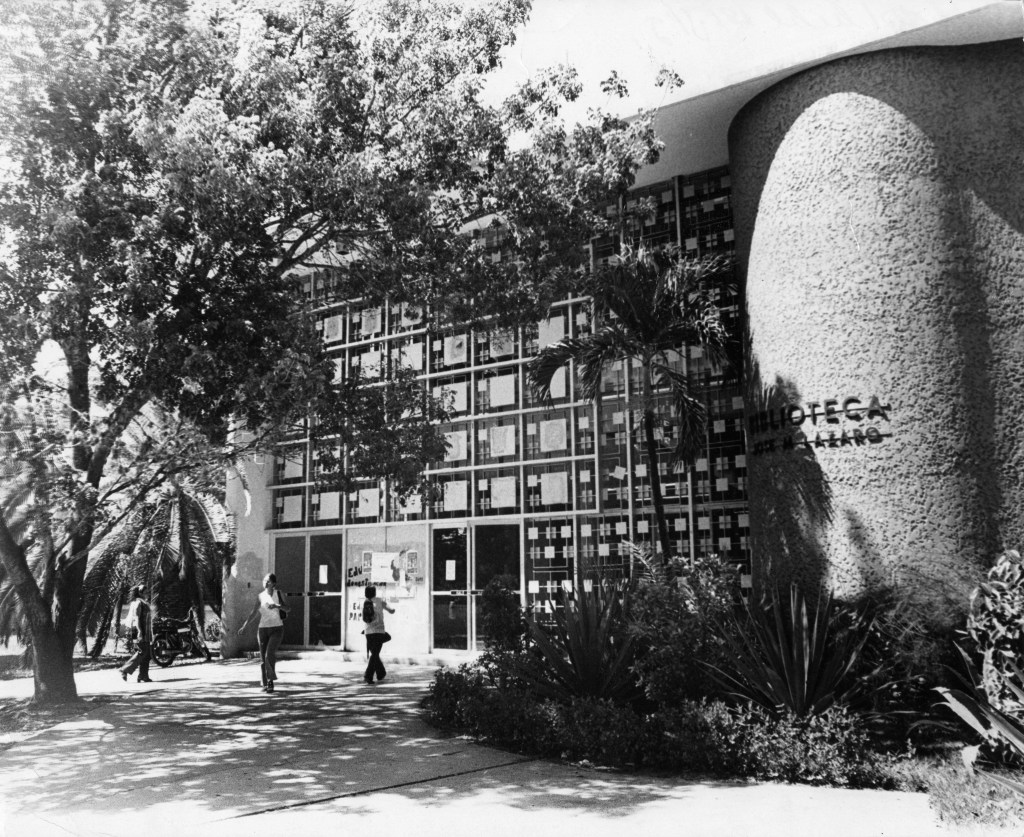
Mamparas de aluminio (fachada principal)
Biblioteca José M. Lázaro
(Universidad de Puerto Rico, Recinto de Río Piedras)

The skin of Henry Klumb’s architecture

The following watercolors focus on the work of the German architect based in Puerto Rico, Henry Klumb, especially on the sunscreens that he employed in most of his institutional works.

Much has been written about Klumb’s work and his desire – almost a predicament – to produce an architecture adapted to the tropics, located to benefit from cross-ventilation, guaranteeing its habitability without exposing it to unnecessary energy consumption.

Those who have encountered his work in person recognize the protagonist role the sunscreen or brise-soleil systems play in the architectural experience. Especially the way in which these diminish the sun’s impact, contribute to privacy (and, in many cases, security), and their capacity to merge the interior spaces with their surrounding environment.

Whoever has glanced closely at the buildings that incorporate these permeable sinks, little imagination requires to recognize that much of the character of the structures lies in the precast elements.

I invite to visualize these buildings without their skin, only then an architecture of few pretentions is revealed, one of cement plastered CMU walls with aluminum, wood, or, glass pane windows. In short, an architecture contrary to what many would expect of institutional buildings.

Such assertion does not intend to detract from Klumb’s work, since outstanding exceptions abound in his architecture. For example, the courtyard of the Escuela de Derecho, the cross-section of the business administration building, and the chapel of the Dominican convent, to name just a few.

On the contrary, more than anything, the argument is aimed at the volumes that are dressed with these sunscreens, where the designer is recognized for his ability to produce “ordinary” or rather “plain” architecture and endow it with aesthetic aspiration through the simple act to enriching its façades, cleared of expendable elements through their skin.

All photos by author unless specified otherwise.

Facultad de Administración de Empresas
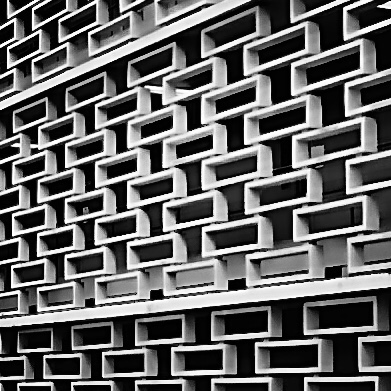
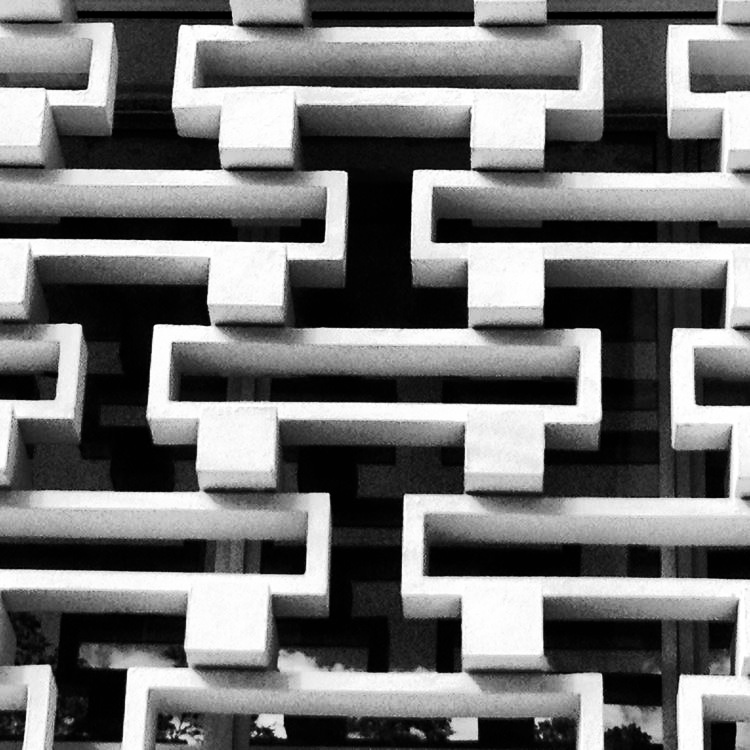
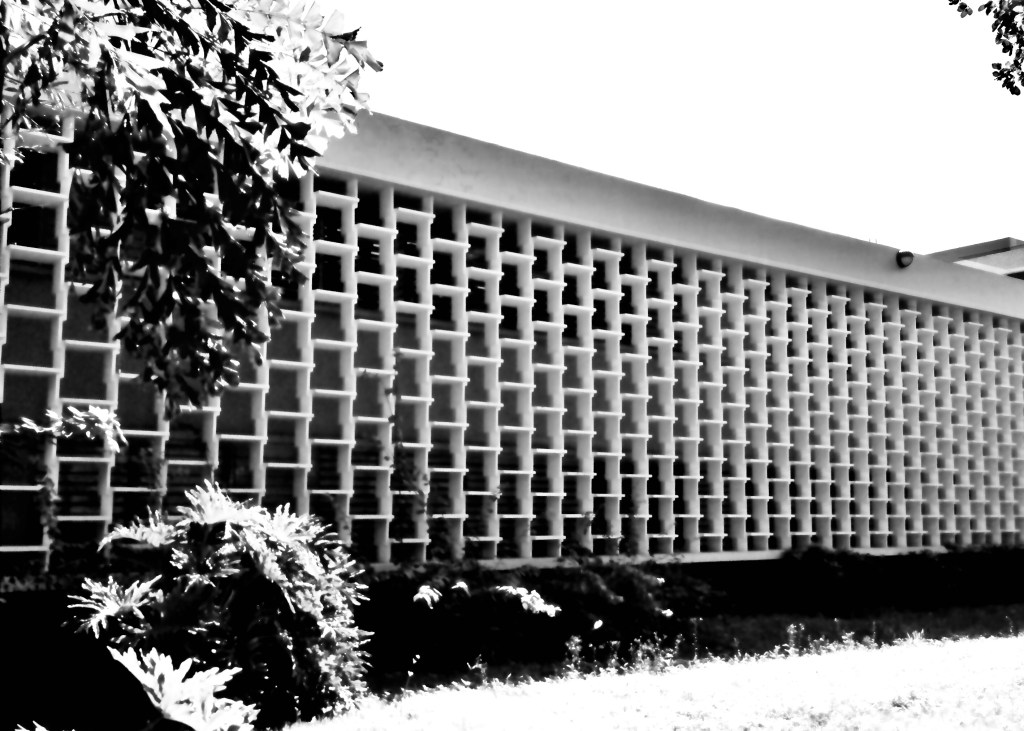
The brise-soleil system consists of a series of rectangular prefabricated elements of approximately 1ft height, 4ft long, 10in deep, and 2 1/2in thick installed in a staggered pattern. Each block seats on concrete trapezoidal prisms that embed to each element to keep the skin in place and restrain its lateral movement.
Edificio IBM
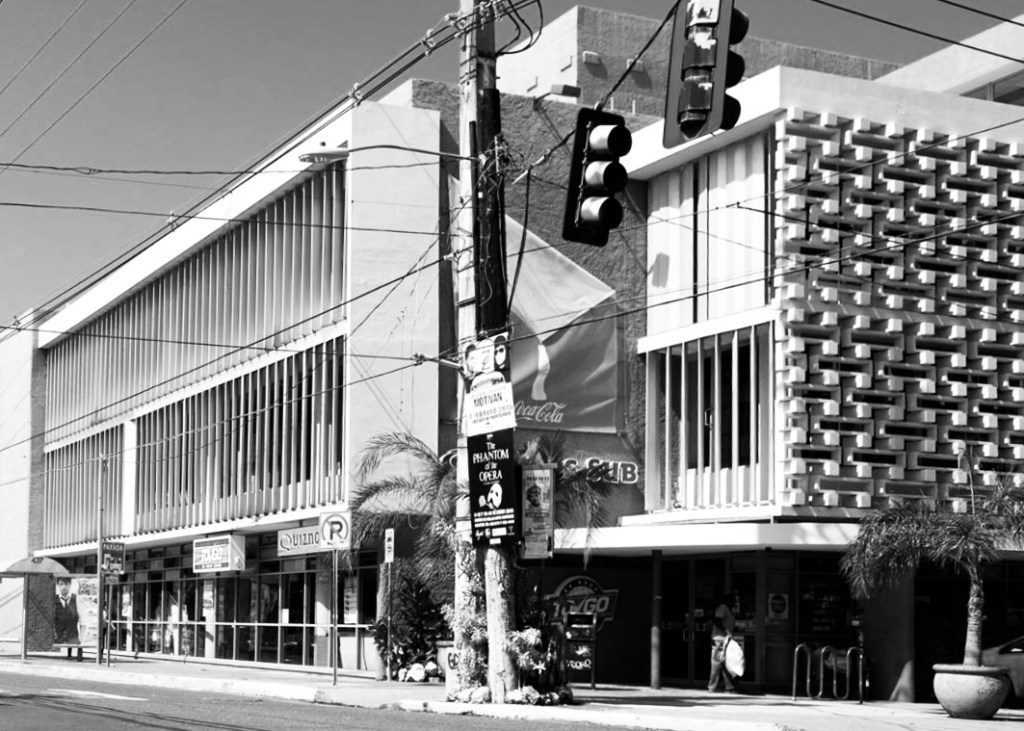
Rectangular elements of approximately 1ft height, 4ft long, 10in deep and 2 1/2in thick (same as described above). The system is also installed in a staggered pattern but in this case, the separators are a series of solid concrete blocks, 6in x 6in x 12in. Each element is embedded with concrete pegs to restrain the system from lateral displacement.
Escuela de Derecho
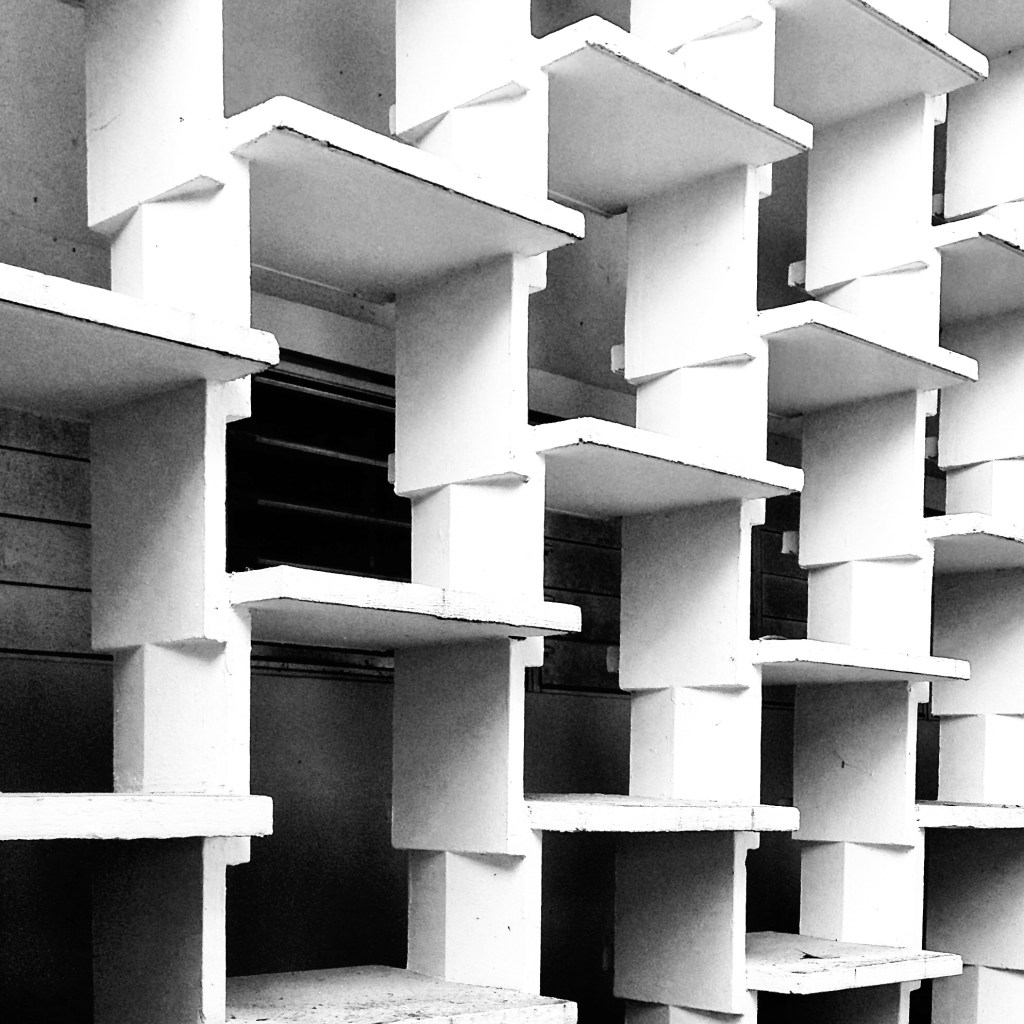
The most complex skin system developed by Klumb. Consist of a series of prefabricated reinforced concrete columns and slabs.

The columns are shaped in zig-zag or serpenting pattern to provide a seat for the slabs. The columns are shaped in a way they coupled with the slabs (male and female) restraint the displacement of the tablets.

The columns are installed at equal spacing (about 18in apart) and each pair is mirrored to provide a staggered pattern for the slabs. The slabs are 2 1/2” thick x 18in wide and 24in deep, while the columns have a thickness of 3in.

Proud Owners, Nosy Visitors: On Touring the Vanna Venturi and Margaret Esherick houses

Better ask for forgiveness rather than permission. As an architect who mostly travels for the sake of experiencing architecture, I have tried to adhere to that motto whenever I encounter a space that I have not planned.

For instance, a few years ago my wife Claudia and I made a trip to Philadelphia and while there, we decided to visit the Vanna Venturi House and the neighboring Esherick House, both at Chestnut Hill East, a 45-minute train ride from Philly. The first was designed by Robert Venturi for his mother in 1962, and the latter for Margaret Esherick by the great Louis I. Kahn in 1959.

Both houses are privately owned and we had not contacted the owners prior to our visit. The idea was to take pictures of the exteriors and if lucky, try to persuade the owners for an interior peek.

It was a chilly Sunday morning when we arrived. The Venturi House was first on our path. As we arrived the property, (and after jumping of excitement for how accessible the house was) I started sketching the iconic main elevation while Claudia was preparing herself to take some pictures.

Vanna-Venturi House, Robert Venturi (1925-2018)

Suddenly we devised a figure, who spotted us through the windows, that immediately rushed to the main door. We’re caught! was our first thought, knowing pretty well how many owners dislike such an invasion of privacy (especially on a Sunday morning). I mean, even if we had spent most of the train trip rehearsing how we would have explained our intentions, it was certainly to early for such shenanigans.

To our surprise, the owner greeted us by saying “you’re in luck! A few more minutes and I had already left the house!” And he kindly invited us in because he had a few minutes to spare and he recognized that we came from afar just to look at the house. Still in disbelief, we started apologizing for the intrusion.

He proceeded to let us know that he was a lawyer and that he had recently acquired the house and was well aware of its significance. While encouraging us to wander around he assured us that he enjoyed allowing to tour the house, more so if they were from out of town. He recounted the multiple times that Bob Venturi and Denise Scott-Brown brought visitors to tour the house.

After our tour, he pointed us towards the Esherick House and assured us that the owners also enjoyed visitors, but were much more careful since they had recently restored the entire wood flooring.

When we arrived at the Esherick it was still quite early and we did not feel as confident to push our luck so we sketched the house and took some pictures and left. A few weeks after posting our photos on social media, a friend from DC sent us an article about the house, and how much its current owners enjoyed having visitors touring the house. Needless to say, I felt disappointed for failing to adhere to the motto and not even trying to ring the door bell. I guess I’ll keep that in mind next time.

Esherick House, Louis I. Kahn (1901-1974)

More about the houses

Designed by Robert Venturi for his mother, the Vanna Venturi House was built between 1962 and 1964. It was conceived during the period that Venturi was writing his seminal book Complexity and Contradiction in Architecture. Therefore, through the house, Venturi positioned himself against the stances of Modern Architecture. In contrast to the, less is more approach of Mies van der Rohe, at the Vanna House, Venturi preferred “…elements which [were] hybrid rather than “pure,” compromising rather than “clear,” distorted rather than “straightforward.”

Considered one of the first projects of Postmodernism — a movement in architecture when the ideas and ideals of Modernism were discarded and replaced with traditional (classical) elements and theories.

Notwithstanding, Venturi sought to push back against the purism of Modernism in praise for “complexity and contradiction” of hibridity in architecture which was more reflective of the times. Therefore, the classically arranged façade contrasted with the dynamism of the interior spaces.

Inside, an open living-dining area is located at the center, with a covered porch, kitchen space and the foyer on one side, and two bedrooms and a full bathroom on the other. The second floor, which account for one-third of the first level, there is a studio-bedroom, with its bathroom, walk-in closets and, a small balcony overlooking the backyard.

The fireplace has a dominant presence, not only at the main elevation, but also at the inside, where its central position. Seems to distort the main stairs. Indeed it seems that Venturi did not wanted to highlight the stairwell, which at first glance looks more like a sculpture, reducing its width as it abruptly ascends around the chimney.

Claudia at the main entrance
Me at the master bedroom

The Esherick House was built between 1959 and 1962 for bookseller Margaret Esherick. The two-story one bedroom house is organized into what Kahn often referred as served spaces (primary areas like living rooms and bedrooms) and servant spaces (secondary areas like bathrooms, storages, corridors, and the like). Therefore, the Esherick House is divided into four main zones of served and servant spaces which run the full width of the house, from front to back.

On the ground floor, the two main served zones include on one side the foyer and dining room and on the other the living room. The double-height living room is the hierarchical space of the house. At the north wall there is a built-in bookcase and on the opposite side a window that spans the two floors.

Between the living room and the dining room, there is the thinnest of the servant zones. It contains the front and backyard entrances on the first floor; two small balconies above these entrances on the second; and the main stairs as well as a corridor overlooking the living room.

Parallel to the dining room, on the first floor, is the remaining servant zone that includes the kitchen*, originally the laundry room, recently converted into a secondary kitchen for daily use, and a half bath. On the second level, the main bathroom, laundry, and a walking closet are located.

On both ends of the longitudinal axis of the house, Kahn designed two sculptural fireplaces that articulate the — somewhat — blank walls.

* The renowned wood sculpture and cabinetmaker Wharton Esherick (uncle of Ms. Esherick) designed the original kitchen, used today only on special occasions.

Esherick House viewed from the southwest.
Esherick’s main entrance façade

from sketch to space, part two

This post is part of a series where I intend to provide additional information while attempting to illustrate the process of restoring San José Church in Old San Juan. Please refer to Part One in a previous post.

Present Time

The current restoration efforts at San José began in 2005 and Jorge Rigau, FAIA – Arquitectos PSC has been fully involved since 2013 a year after the Patronato de Monumentos de San Juan was established as a not-for-profit private organization to oversee and secure funds for the works.

Past

San José was occupied for almost five centuries by three religious orders; Dominicans, Jesuits, and Vincentians. The church was originally named Santo Tomás de Aquino (Saint Aquinas) by the Dominican Order, who built it as part of their convent. The structure as we see it today was the product of a series of interventions that spanned almost three centuries, up to the mid-1800s until the Dominican Order was expelled and the Spanish government seizes control of the convent.

Later in the 1860s, the Jesuits took over the church and eventually renamed it as San José. During their stay, but most probably in preparation for their arrival, major interventions were performed. However, the character of these works was primarily aesthetic. One can only imagine that, in comparison to other Jesuit churches, the modest finishes under the Dominican period were too austere for their taste.

Therefore, the clay floor (there are only written accounts of its existence) was replaced with an Italian marble. Also, an exuberant gothic altarpiece or retablo was installed in its main page; and all interiors were plastered, while its main vaults were ornately painted blue and decorated with stars in allusion of a cielo aperto. We know about the existence by black & white photographs of the early 20th century, as well as traces of the blue paint and brass nails that presumably held the stars were still visible in the vaults. Surprisingly, after all these efforts, the Jesuits did not stay long at Sa José. Shortly by the early 1930s the Vincentian Fathers had already made changes to the church and stayed until its closure in the late 1990s.

The intervention

During the process of completion of San José, multiple building materials and methods were used. For example, stone masonry construction was employed during the original sections of the church. Therefore, apse, and transept, as well as part of the main and lateral naves were built with traditional medieval stone masonry construction. (See sketch below) For the rest of the structure rubble masonry walls were employed.

At some point — possibly during the Jesuit period — the northwest arch of the main nave opening towards the lateral nave was enlarged in what seems like an attempt to provide uniformity with the other arches at both sides of the space. However, while all other arches were made either in stone or brick masonry this one was reinforced with concrete, all hidden behind cement plaster.

We cannot say exactly when the concrete reinforcement had been applied, but by the time we encountered, the structure had been failing due to corrosion and spalling. It was our recommendation to carefully remove the concrete and instead provide a more compatible reinforcement to the unstable rubble masonry opening.

Sketch illustrating the new brick masonry arch to be erected in lieu of the incompatible reinforced concrete intervention.

Explanatory sketch (with on site clarification jots) to illustrate the laying of bricks and how to (and not to) cut the bricks to articulate the arch’s corners. The articulation was a way to emulate — without copying — the profile of the medieval stone voussoirs of the existing arches.

The next two photographs illustrate the process of erection of the new arch and the last image portraits the finalized brick reinforcement.

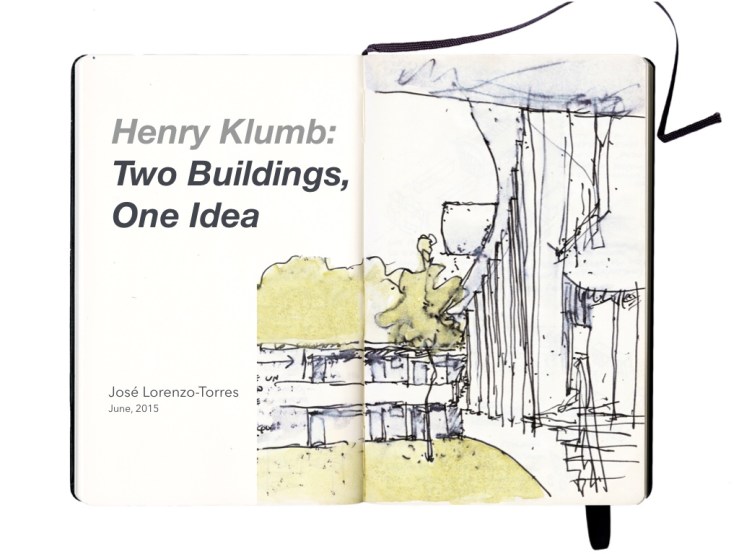
Henry Klumb: Two Buildings, One Idea

The seed for this post was originally a discussion on the architecture of Henry Klumb* sponsored by the Preservation Committee of Puerto Rico’s Architects and Landscape Architects Association (CAAPPR) and docomomo_puerto Rico, the local chapter of the International Organization for the Documentation and Conservation of Modern Movement, that I proudly presided at the time.

As expected, I have slightly edited the text.

On March 29 (2015) opened the exhibition Latin America in Construction: Architecture (from) 1955 (to) 1980 at the Museum of Modern Art in New York. It celebrated the 60th anniversary of the exhibition that MoMA organized in 1955 about Latin American architecture built by 1945. At that time, the architectural production of a decade was presented and in representation of modern architecture in Puerto Rico, two works were exhibited: the Caribe Hilton Hotel by Toro y Ferrer Arquitectos and the Sanctuary of San Martín de Porres by Henry Klumb.

In the later exhibition, although it included architecture produced in a span of a quarter of a century, only one work from Puerto Rico was selected; Henry Klumb’s intervention of a traditional nineteenth-century hacienda in Río Piedras.**

In the assembly of a large-scale exhibition like this one, omissions are understandable, especially since including a whole sampling of works and figures from multiple countries is most certainly not an easy task. The problem — or rather what bothers me to this day — which is what somehow happened with the works chosen to represent Puerto Rican modern architecture 60 years ago — is that MoMA seems to perpetuate the promotion of IMAGES before IDEAS.

To reduce the architectural production of a quarter of a century in Puerto Rico to one surrounded by exuberant nature, or open to natural ventilation is to limit architectural ideas to mere tropical iconography. Whether or not intentional, it is somewhat offensive that peers do not acknowledge architectural sophistication in the Antillean Region.***

In the 1955 exhibition, its curator, Henry Russell Hitchcock, chose to describe the Sanctuary of San Martín de Porres — when comparing it to the ecclesiastical work of Oscar Niemeyer — as lacking dramatic spatial effects, just for the simple fact that its scale is not as monumental as the work of the Brazilian architect.

Referring to the diagonally arranged piers employed by Klumb at San Martín as light deflectors — dazzled perhaps by the fact that the chapel is open to natural ventilation — Hitchcock wasted the opportunity to recognize the spatial idea behind the structural elements.

With the piers, as designed and built, Klumb recognized the religious commitment of the Order of Preachers, also known as the Dominican Order, to amplify and promote the spread of the gospel.

If the first Dominican churches in the New World resorted to monumentality to carry over the word of God, at San Martín, Klumb used the angled walls to dramatize the diffusion of the Dominican ecclesiastical message.

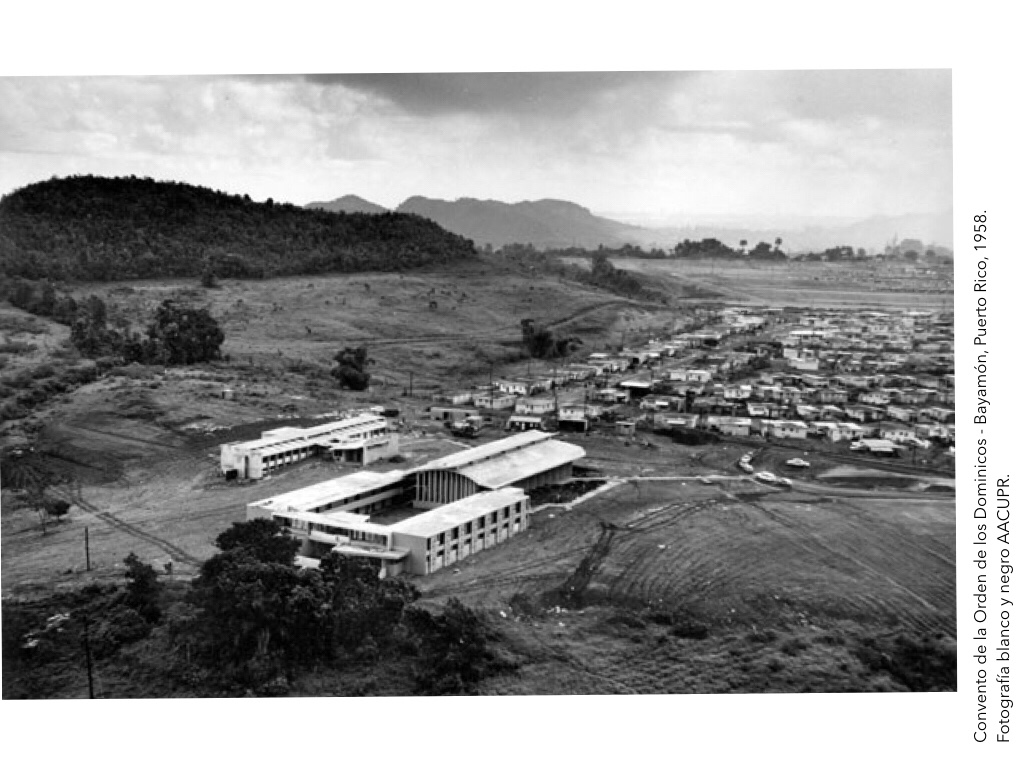
More importantly, it surprises that despite the fact that the 2015 exhibition had the support of the Architecture and Construction Archive of the School of Architecture of the University of Puerto Rico (AACUPR in Spanish), curators wasted the opportunity to include a more representative work. Henry Klumb’s Dominican Friars Convent built in 1958 in Bayamón, Puerto Rico, would have proved a better example.

A work in which the late architect, 10 years after having conceived San Martín de Porres, had enough time to rethink and mature the spatial ideas and architectural details he would rehearse in Cataño.

The following analytical drawings further illustrate the point.

Abstract axonometric animation on the evolution of the spatial ideas at play at the Sanctuary to San Martín de Porres the Dominican Convent.

The photographs and sketches above illustrate how the diagonally arranged piers provide a dual spatial experience. On both buildings, while attending mass (looking at the altar) the angled piers become a solid plane that frames our attention towards the liturgical event. In contrast, looking away from the altar the piers become a transparent plane that allows the interior space to extend beyond its built boundaries.

In contrast to the tight suburban lot where Klumb had to erect the sanctuary, the site at the convent was larger. Therefore, the spatial quality achieved at San Martín, aided by the hanging plants and low concrete walls, was further expanded at the Dominican residence, not only at the church space, but throughout the complex.

At the time of the lecture on this subject (in 2015) many of those present at the event did not know the Dominican Seminary. And that should have made us think, that while we recognized the omissions of the exhibition of the Museum of Modern Art, we also needed to reconsider ours locally. MoMA’s omissions are justified because any exhibition constitutes an act of summarizing. And anyone that summarizes, at the same time undoes and, as result, remakes history.

Notes:

* Henry Klumb, was a German architect born in 1905. He emigrated in 1927 to the United States to become an apprentice at Frank Lloyd Wright’s Taliesin North in Wisconsin. After five years, he left Taliesin and worked briefly with Louis I. Kahn and Louis Metzinger, forming the Cooperative Planners firm in Philadelphia during the period of the Great Depression. In 1944 he was invited by Rexford Tugwell (Governor of Puerto Rico at the time) to work as design consultant at the Public Works Design Committee. A few years later, he established the Office of Henry Klumb in San Juan from where he designed all types of private and public projects all over the Island.

** The exhibition catalog included a black and white photograph (right image at the second illustration above) of La Parroquia Nuestra Señora del Carmen in Cataño, Puerto Rico designed by Henry Klumb in 1959. For an earlier post on Casa Klumb, please refer to: https://wp.me/p1hCI1-a2

*** Despite the myopia with which MoMA decided to carry out the exhibition, Dr. Enrique Vivoni (former director and founder of the Architecture and Construction Archive of the School of Architecture at University of Puerto Rico; entity that preserves the historical documents of myriad architectural firms of the Island) clarified in the commented bibliography section that he was asked to produce for the exhibition catalog, the existence of an analytical/critical tradition of architecture in Puerto Rico.

Our critique of MoMA’s short sightedness has also been diagnosed by others. For example, on the introduction of Aalto and America, Stanford Anderson calls-out MoMA’s myopia when they organized the Finnish architect’s Cenntenial Exhibition and “…gave spare attention to Aalto’s relationship with America, which is all the more surprising for the fact that New York, and indeed the Museum itself, figured largely in Aalto’s experience of America.”

from sketch to space, part one

Until last year (2017), while working at Jorge Rigau, FAIA -Arquitectos PSC (jorgerigau.com), I collaborated in the restoration of San José Church in Old San Juan, the second oldest church in the New World. Originally built by the Dominican Order, its construction began in 1532, and spanned until mid-19th Century, with several restoration efforts undertaken during the 20th Century.

As an overseer of the conservation effort under the Patronato de Monumentos de San Juan, I recorded minute details of existing conditions, as well as restoration techniques, and on-site solutions and recommendations.

Customarily, architecture projects rely heavily on construction plans; and while historic preservation endeavors are not exempt of including such drawings, on-site sketches and recording field notes tend to have greater weight. First, because surprises abound; second, since — more often than not — complex tasks need to be translated to workers; and finally, because preservation is mainly about restoring traditions, and on-site instructions — I strongly believe — is one of them.

In this post and a series following, I’ll illustrate how some of those graphic instructions aided at the restoration of myriad elements throughout San José.

While assessing a structural fracture at the Virgen del Rosario Chapel a wall niche or hornacina was discovered behind cement plaster. In what seemed like an attempt to address the structural crack (or change in liturgical aesthetics), the niche had been sealed off from view.

Throughout time, a series of earthquakes affecting Old San Juan had structurally compromised the church and several openings had been repaired. Even if well-intentioned, most too often this repairs where performed with incompatible or feeble means and methods.

Notwithstanding, vestiges of the original niche were still visible under the improvised enclosures. Therefore, we opted for reconstructing the niche, albeit ensuring an appropriate structural reinforcement of the fractured wall above. The sketch above illustrates our response; restoring the original half-round niche and providing a half-dome to structurally stabilize the damaged lintel, allowing the safe distribution of gravitational forces towards the reinforced brick masonry base.

The photo below shows a bricklayer erecting the masonry base that supported the half-dome. The voids between the brick masonry of the new niche and the uneven surfaces of the rubble masonry wall were carefully filled in with a compatible mortar in order to provide a solid substructure. The subsequent images show the finished hornacina within the space.*

* We decided just to include our sketches, photos of the process and images of the finished product. But in Puerto Rico, for far too long, traditional means and methods of construction like brick, stone or rubble masonry, had been lost. During the mid-20th Century, disguised as a way to withstand hurricanes, traditional construction including wood had been replaced by reinforced concrete (and eventually steel) construction.
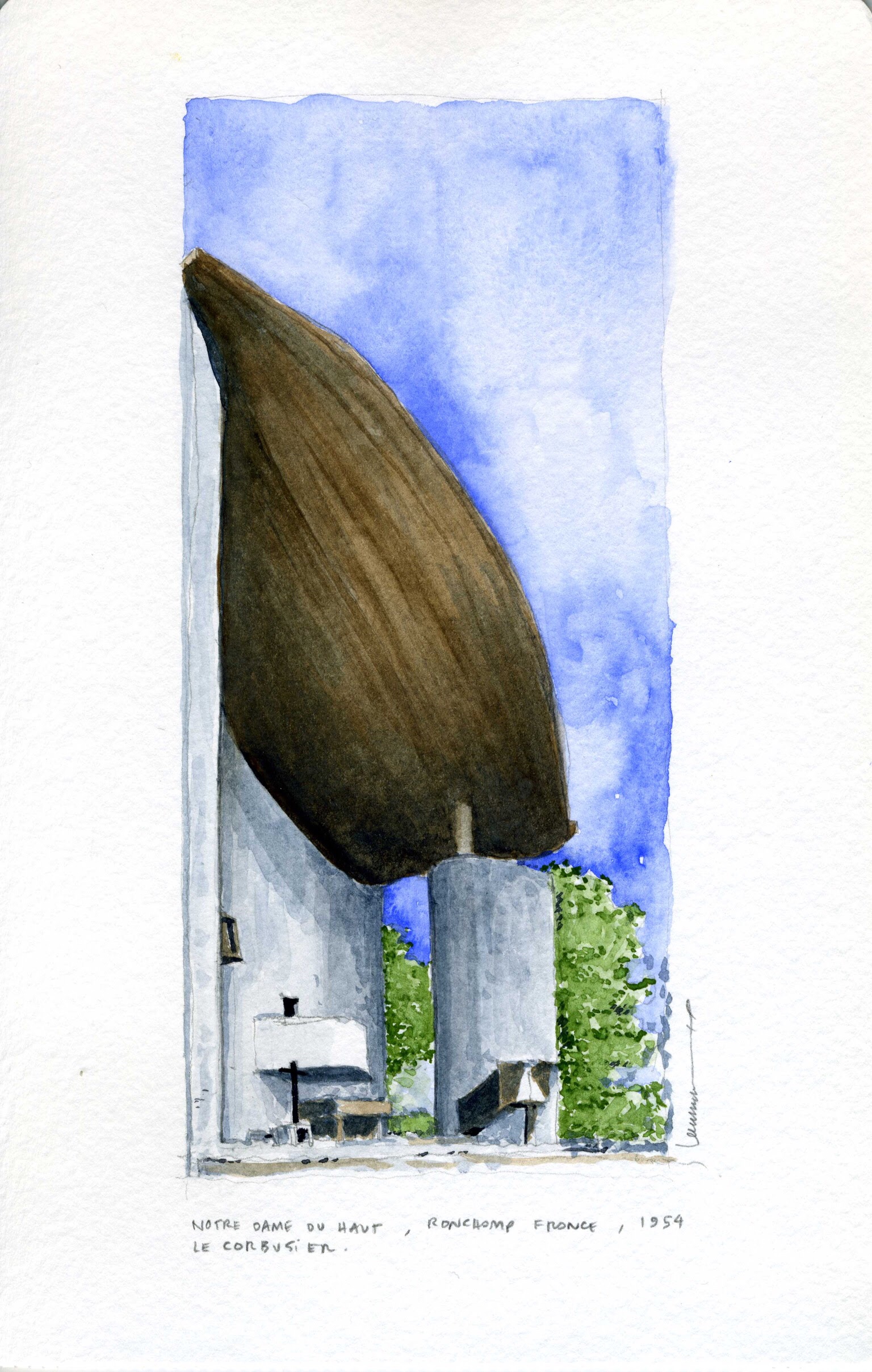
Needless to say, throughout the restoration process of San José workers encountered multiple difficulties. Regardless of their avid skills, many initially lacked the discipline to deal with the minute details pertaining traditional construction; careful selection of materials; consistency of mortar mix production; and most importantly, the need for erecting work ensuring geometrical precision in order to withstand the effects of gravity.

Workers quickly learned the fact that masonry construction is not as forgiving (not to say malleable) as reinforced concrete; therefore there were many failed-starts. Fortunately, in all instances, workers’ pride for their craft and perseverance worked in our favor. The finished product not only ended as imagined, but it also performs as intended.

places i’ve drawn, but have not yet visited series: erik bryggman’s chapel of resurrection

This is a set of drawings I often made when I taught a course on History of Modern Architecture at Polytechnic University in Puerto Rico.

national museum of african american history & culture, washington dc 

Designed by David Adjaye (in collaboration with Philip Freelon and Smithgroup) and completed in 2016.

The museum exhibits are divided into two general areas, contemporary culture and the history and vicissitudes of African Americans. The contemporary are displayed at the main volume — a glazed cube protected by the bronze architectural scrim that forms the ’corona’; the main volume visible from the National Mall. In contrast, the historical exhibits are gracefully displayed deep underground — not as if hiding them — but as a powerful remembrance of what — still to this day — lies buried deeply in American History.

The surrounding landscape was designed by Gustafson, Guthrie & Nichol of GGN. The grounds not only becomes a plinth where the museum rests but also creates a solemn space to reflect on what was viewed inside.